The Critical Middle Rung of the Racing Ladder
Between karting glory and Formula 1 stardom lies a demanding stretch of junior single-seater championships that make or break careers. Eurocup-3 and Formula Regional European Championship (FREC) represent this crucial middle tier, where drivers in their late teens prove whether they have the raw talent, racecraft, and mental fortitude to climb higher.
These series operate on identical Tatuus chassis with Alfa Romeo engines producing around 270 horsepower. The standardized machinery strips away equipment advantages and forces young drivers to distinguish themselves through pure ability. For fans following motorsport’s future stars, understanding this pathway reveals the true depth of talent development.
How the Junior Formula Pathway Works
The modern route to Formula 1 follows a relatively structured ladder. Most drivers begin in karting around age eight, then graduate to Formula 4 championships at fifteen or sixteen. F4 teaches the fundamentals of single-seater racing: proper racing lines, slipstreaming, tire management, and working with professional teams.
From F4, the best performers advance to regional formula championships. Eurocup-3, run by the Royal Automobile Club of Spain, and FREC, organized by ACI Sport, both use FIA-homologated Formula Regional machinery. These championships visit iconic circuits including Spa-Francorchamps, Barcelona-Catalunya, Monza, and the Red Bull Ring.
The jump in performance from F4 is substantial. Lap times drop by several seconds per circuit. Aerodynamic loads increase significantly, teaching drivers how to manage higher-speed cornering. This is where racers learn to extract maximum performance while managing wear on components that must last multiple sessions.
What Makes These Championships So Competitive
Grids in Eurocup-3 and FREC regularly exceed thirty cars. Drivers come from diverse backgrounds spanning multiple continents. European talent competes against racers from Asia, South America, and the Middle East, all chasing limited seats in Formula 3 and eventually Formula 2.
Teams like MP Motorsport, Trident, Prema Racing, and ART Grand Prix operate in these championships, providing professional environments that mirror higher-level operations. Young drivers must adapt to demanding schedules including practice, qualifying, and multiple races per weekend, often in variable weather conditions.
Following the Journey of Rising Drivers
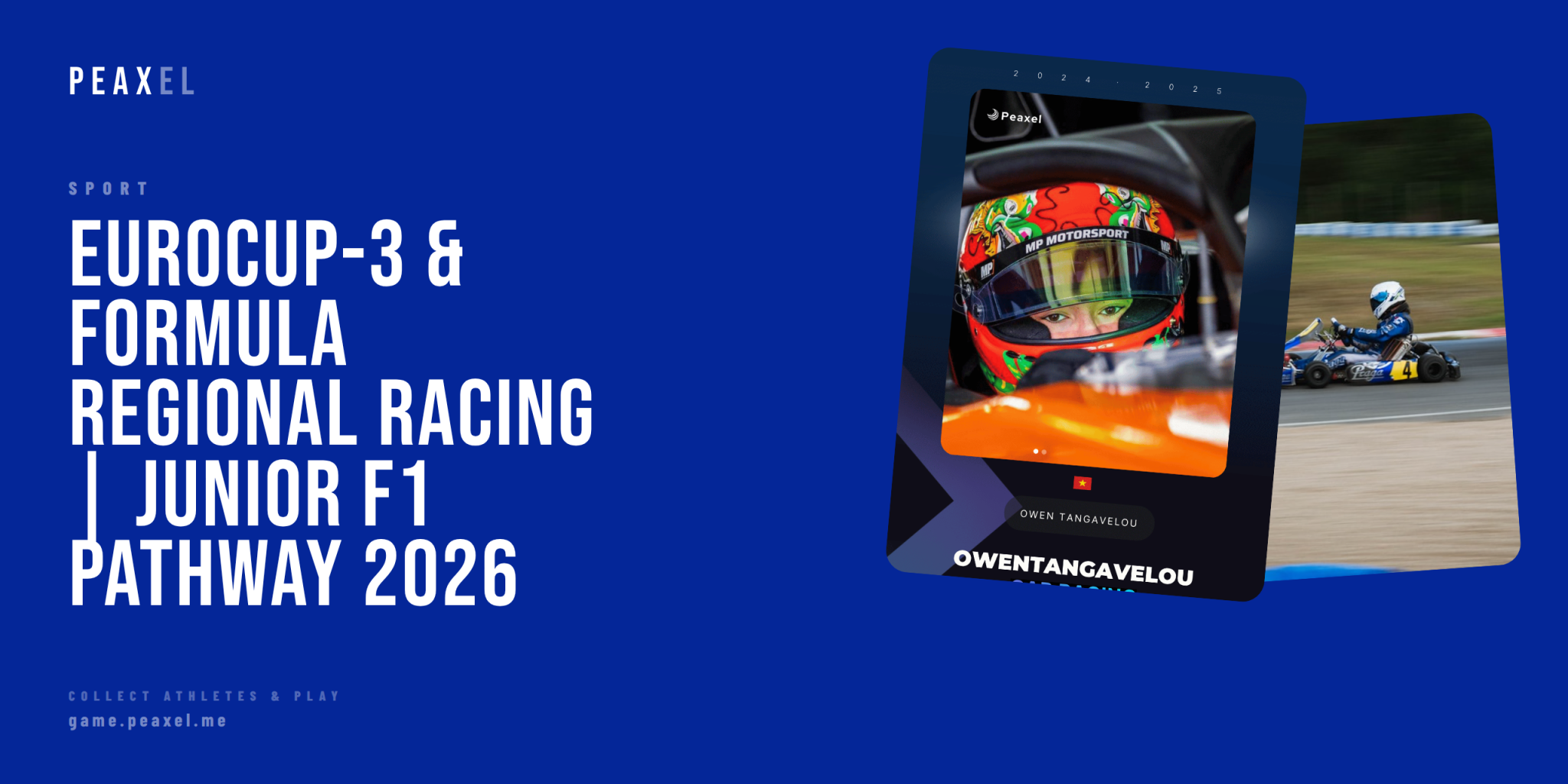
The career trajectory of Owen Tangavelou illustrates the junior single-seater pathway perfectly. Born in Clamart, France, with French-Vietnamese heritage, he started his single-seater career in the French F4 Championship in 2020 at age fourteen, finishing twelfth overall in his debut season.
By 2021, Tangavelou had improved to fifth place with two podium finishes and two fastest laps, demonstrating rapid development. His 2022 campaign saw him expand internationally, competing in both the Formula Regional Asian Championship with Hitech Grand Prix and FREC with G4 Racing.
The 2023 season with Trident in FREC brought two top-five finishes and a fourteenth-place championship result. In 2024, Owen joined MP Motorsport for the Eurocup-3 series, scoring points at Barcelona and Spa-Francorchamps while gaining valuable experience against a stacked field. Fans can follow his continued progression on Peaxel.
Swiss Talent Making Waves
Similarly, Dario Cabanelas represents the international makeup of these championships. The Swiss driver with Spanish and Ukrainian heritage came through karting with victories in the Vega Trofeo before transitioning to French F4 in 2021.
Cabanelas made his Eurocup-3 debut in late 2023 with Saintéloc Racing, immediately proving competitive with consistent top-ten finishes. His performances earned a full-season seat with MP Motorsport for 2024, where he lined up alongside future stars including Emerson Fittipaldi Jr. His journey demonstrates how quickly talented drivers can progress when they deliver results.
The Financial Reality of Junior Racing
Competing at Eurocup-3 or FREC level requires substantial investment. Season budgets typically range from 400,000 to 700,000 euros, covering seat fees, testing, travel, and equipment. Unlike karting where families often manage operations independently, junior formula racing demands professional team structures.
This financial barrier means sponsorship becomes essential. Young drivers must develop marketing skills alongside racing ability, building personal brands that attract commercial partners. Social media presence, media training, and sponsor relations become part of daily life.
Driver academies run by Formula 1 teams provide another pathway. Ferrari, Red Bull, Mercedes, McLaren, and Alpine all maintain junior programs that support talented drivers financially while tracking their development. Earning a spot in these academies requires exceptional results and the right timing.
What Fans Should Watch For
Following junior formula racing reveals motorsport storytelling at its rawest. Drivers in their late teens making career-defining decisions, teams gambling on unproven talent, and championship battles that determine who gets the golden ticket to advance.
Key metrics to track include qualifying pace versus race pace, consistency across different circuit types, wet weather performance, and wheel-to-wheel racecraft. The best prospects show adaptability, learning new tracks quickly and extracting performance from unfamiliar conditions.
Live timing and onboard footage available through championship streaming packages allow fans to analyze driving techniques in detail. Watching how young drivers handle pressure in final-lap battles reveals character that statistics alone cannot capture.
The Path Forward
Success in Eurocup-3 or FREC typically leads to FIA Formula 3, the final step before Formula 2 and the realistic shot at F1. Championship winners and top performers earn the attention of team principals and talent scouts across the paddock.
The conversion rate remains brutal. From a thirty-car Eurocup-3 grid, perhaps three or four drivers will eventually reach Formula 3 with competitive drives. Fewer still will make Formula 2, and historically only one or two per generation will reach the F1 grid.
Yet this harsh filtering is precisely what makes following junior single-seater racing compelling. Every weekend matters. Every mistake echoes through career trajectories. The drivers who emerge from this crucible earn their place through sustained excellence.
Discovering Junior Motorsport Talent
Platforms like Peaxel make it easier than ever to follow emerging drivers before they become household names. By collecting athlete cards and tracking performances, fans can engage with the careers of future stars while they navigate the demanding junior formula landscape.
The full roster of sports available on Peaxel includes motorsport alongside dozens of other disciplines, allowing fans to discover talent across the entire athletic spectrum. For those drawn to the intensity of junior single-seater racing, following drivers like Tangavelou and Cabanelas offers a front-row seat to the next chapter of motorsport history.