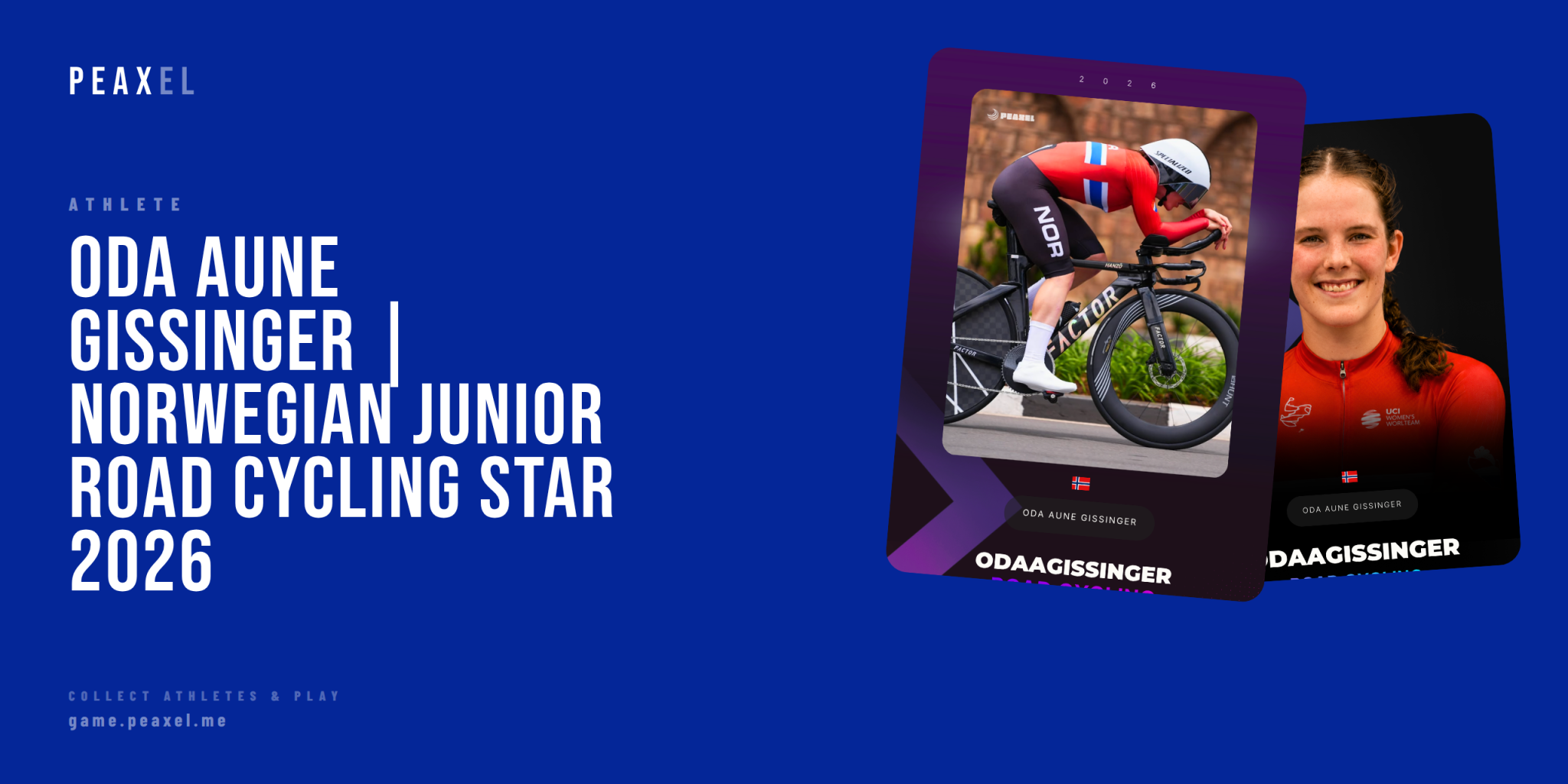
A World Championship Bronze at Seventeen
In September 2025, the cycling world turned its attention to Kigali, Rwanda, for the UCI Road World Championships. Among the junior women lining up for the individual time trial was Oda Aune Gissinger, a 17-year-old Norwegian in just her first full season of competitive racing. What followed was a performance that announced her arrival on the global stage.
Gissinger powered through the course, leading at the intermediate checkpoint and crossing the finish line in what she believed might be a winning time. She had to wait as higher-seeded riders completed their runs. When Dutch favourite Megan Arens finished 37 seconds faster, Gissinger’s bronze medal was confirmed. It was a result that exceeded expectations for an athlete so early in her competitive journey.
The bronze in Kigali was not an isolated moment of brilliance. It was the culmination of a season that saw Gissinger win races across three continents, establish herself as Norway’s top junior time trialist, and demonstrate a racing intelligence that belies her age.
The Breakthrough Season of 2025
Gissinger’s 2025 campaign began with her already showing promise in Norwegian junior ranks. But her international breakthrough came at the Grand Prix CERATIZIT Women Junior in France, a prestigious televised UCI-ranked event. Racing against the best junior women in Europe, she read the race perfectly, positioning herself in a decisive breakaway and executing when it mattered most to claim victory.
Weeks later, she won the Norwegian Junior National Championship in the time trial, confirming her status as her country’s leading young specialist against the clock. Time trialling demands a unique combination of sustained power output, aerodynamic efficiency, and pacing strategy. Gissinger showed she possessed all three.
Her most dramatic victory came at the inaugural Tour de l’Abitibi Féminin in Canada. Entering the final stage 51 seconds behind the race leader, Gissinger faced an individual time trial that would determine the overall classification. Her power meter failed before the start. Rather than panic, she rode entirely on feel, producing an effort so strong she not only erased the deficit but claimed the leader’s jersey outright. It was a performance that revealed her mental strength as much as her physical talent.
From Club Racing to Continental Competition
Born on April 28, 2007, Gissinger developed through the Norwegian cycling system with club CK Victoria before joining Hitec Products-Fluid Control, a Norwegian UCI Women’s Continental team known for developing young talent. The team provided her with the platform to race internationally while continuing her progression.
Her versatility sets her apart from many junior specialists. While time trials remain her strongest discipline, Gissinger has shown she can compete in hilly one-day races and stage races alike. This adaptability is crucial for any rider hoping to build a long professional career at the highest level.
In 2026, she made her WorldTour debut at the Vuelta a Burgos Féminas in Spain. Rather than simply survive against senior professionals, Gissinger attacked. She spent over 110 kilometres in a breakaway, an audacious move that earned her the mountain jersey. It was a statement that she intends to race aggressively at every level, not merely participate.
The Technical Demands of Junior Time Trialling
Time trial racing at the junior level presents specific challenges. Riders must generate maximum sustainable power while maintaining an aerodynamic position that minimises drag. Unlike road racing, there is no peloton to shelter in, no teammates to share the workload. Every watt of power and every second of positioning matters.
Gissinger’s bronze medal ride in Kigali demonstrated her understanding of these demands. She paced her effort precisely, arriving at the intermediate checkpoint with time in hand before maintaining her rhythm to the finish. The altitude in Rwanda added another variable, with the thin air affecting oxygen uptake and requiring riders to adjust their power targets accordingly.
Her ability to perform without a power meter at Tour de l’Abitibi showed something equally important: an intuitive understanding of her body’s capabilities. The best time trialists develop this feel over years of training, learning to recognise the sustainable threshold between holding back and overcooking an effort. That Gissinger possessed this skill as a 17-year-old suggests natural racing instincts refined by quality coaching.
Norway’s Growing Presence in Women’s Cycling
Gissinger emerges at a time when Norwegian cycling is experiencing significant growth. The country has produced world-class talent across multiple disciplines, from track sprinting to mountain biking. In women’s road racing, the pathway from junior ranks to professional competition has strengthened, with teams like Hitec Products-Fluid Control providing crucial development opportunities.
The Norwegian cycling federation has invested in identifying and supporting young talent through structured programmes that balance racing experience with long-term athlete development. Gissinger is a product of this system, benefiting from quality coaching and competition opportunities while still in her teenage years.
Her success also reflects broader trends in women’s cycling. The sport has expanded dramatically in recent years, with more races, better prize money, and increased media coverage creating a more sustainable career path for professional riders. Young talents like Gissinger enter the sport knowing that a viable professional future exists if they continue to develop.
What Makes Gissinger Different
Many junior cyclists show promise. Fewer deliver consistently across different race formats and conditions. Gissinger’s 2025 season stood out because of her ability to win in varied circumstances: a tactical road race in France, a national championship time trial in Norway, a come-from-behind stage race victory in Canada, and a podium performance at the World Championships in Africa.
Her racing intelligence appears advanced for her age. The decision-making required to position correctly in a breakaway, to pace a time trial optimally, or to attack when others are defending requires experience that typically takes years to accumulate. Gissinger seems to have compressed this learning curve through quality racing and natural aptitude.
Physical attributes matter too. Time trial specialists require the ability to sustain high power outputs in an aerodynamic position for extended periods. Gissinger’s performances suggest she possesses the physiological profile suited to this demanding discipline, though she has shown she is not limited to racing against the clock alone.
The Road Ahead
At 18, Gissinger faces the transition from junior to under-23 and eventually senior competition. This jump challenges many promising juniors, as the gap in experience and physical maturity between categories can be significant. Her WorldTour debut at Vuelta a Burgos suggests she is prepared to embrace this challenge rather than wait for it.
The 2026 season will provide more data points about her trajectory. How she performs against senior professionals throughout the year, whether she continues to develop her climbing and tactical abilities, and how she handles the increased demands of a fuller racing calendar will all shape expectations for her future.
For now, Gissinger represents exactly what cycling fans hope to see from emerging talent: a young rider who combines physical ability with racing intelligence, who performs on the biggest stages, and who approaches competition with ambition rather than caution. Her bronze medal in Kigali was not the end of a story but the beginning of one.
You can follow Oda Aune Gissinger’s career and add her to your fantasy team on Peaxel, where fans can support and track athletes across dozens of sports worldwide.