The Foundation of Professional Cycling Begins Young
Professional road cycling doesn’t emerge from nothing. Behind every WorldTour champion lies years of development through structured junior racing programs. Junior road cycling—encompassing riders aged 17 to 18—represents the final stage before athletes transition into under-23 and elite continental competition. This critical period shapes race intelligence, physical development, and tactical awareness that define careers.
The UCI governs junior road cycling with a dedicated calendar featuring world championships, continental championships, and prestigious stage races. These events serve dual purposes: identifying exceptional talent and providing race experience that cannot be replicated in training. Young riders learn to read pelotons, manage energy across multi-day events, and execute under pressure against international competition.
Key Races Defining Junior Cycling Careers
UCI Junior Road World Championships
The annual UCI Junior Road World Championships remain the pinnacle of youth cycling competition. Held alongside elite and under-23 events, the junior races attract national teams bringing their strongest emerging talents. The 2025 edition in Kigali, Rwanda marked the first African-hosted world championships, adding new dimensions to course design and environmental challenges.
Junior world championship medals carry significant weight in rider development. National federations use results to allocate development funding and determine which athletes receive continental team placements. A strong world championship performance can accelerate a career by years, opening doors to professional team development squads.
Stage Races and Development Events
Multi-day junior stage races provide irreplaceable experience. Events like Tour de l’Abitibi in Canada and the Aubel-Thimister-Stavelot in Belgium teach young riders how to recover between stages, protect positions in general classification, and coordinate team tactics across multiple days. These skills prove essential when transitioning to longer professional stage races.
The inaugural Tour de l’Abitibi Féminin in 2025 demonstrated the expanding opportunities for young women in cycling. Athletes who had never raced multi-day events learned to manage general classification deficits and execute comeback performances in time trial stages—experiences that translate directly to professional racing demands.
National Development Structures
European Powerhouses
Countries like the Netherlands, Belgium, and Norway maintain sophisticated junior development systems. The Dutch system benefits from integration between club racing, national team programs, and continental team relationships. Young riders progress through structured pathways with clear performance benchmarks at each level.
Norwegian cycling has invested heavily in youth development despite the country’s challenging climate. Indoor training facilities, altitude camps, and international race calendars allow Norwegian juniors to compete against the world’s best despite limited domestic road racing seasons. This systematic approach has produced breakthrough talents who transition smoothly into continental and WorldTour teams.
Emerging Cycling Nations
Beyond traditional cycling strongholds, nations across Africa, Asia, and South America increasingly develop junior talent pipelines. The UCI’s development programs support national federations in building coaching expertise, racing infrastructure, and international competition access. These investments are producing competitive junior fields with genuine global representation.
The Physical and Tactical Development Window
Junior cycling occupies a unique physiological window. Athletes aged 17 to 18 experience significant physical maturation while simultaneously developing race-specific skills. Coaches must balance performance development against long-term athlete health, avoiding overtraining during critical growth periods.
Tactical education during junior years proves equally important. Young riders must learn positioning within pelotons, wind management, cornering at speed, and feed zone protocols. These skills become automatic through repetition in competitive environments—something training alone cannot provide.
Time Trial Specialization
Individual time trial disciplines within junior cycling identify riders with exceptional aerobic capacity and pain tolerance. Time trials remove tactical variables, revealing pure physical potential. National championships and world championship time trials serve as benchmarking events where riders measure themselves against global standards.
Athletes who demonstrate time trial excellence often receive targeted development support. The discipline translates directly to general classification contention in stage races, making time trial specialists valuable commodities for professional teams building future grand tour contenders.
Transitioning to Professional Cycling
Continental Team Pathways
Most successful junior cyclists join continental development teams after their junior years. These teams—often affiliated with WorldTour organizations—provide professional racing environments while allowing continued physical development. Riders compete in under-23 races and lower-tier professional events, building experience before potential WorldTour contracts.
The transition period between junior and professional racing represents cycling’s steepest learning curve. Race distances increase dramatically, competition intensity rises, and calendar demands test physical and mental resilience. Athletes who navigate this transition successfully often share common traits: adaptability, work ethic, and realistic self-assessment.
Identifying Future Champions
Professional team scouts increasingly attend junior world championships and prestigious stage races. They evaluate not just results but racing behavior—how athletes respond to adversity, communicate with teammates, and manage pressure situations. Technical results matter less than demonstrated potential and coachability.
Fantasy sports platforms like Peaxel now track emerging cycling talent, allowing fans to follow young athletes before they reach mainstream recognition. This early engagement creates invested fan communities that grow alongside athlete careers. Platforms featuring diverse sports including cycling provide visibility that accelerates athlete profile development.
Rising Talents Shaping the Future
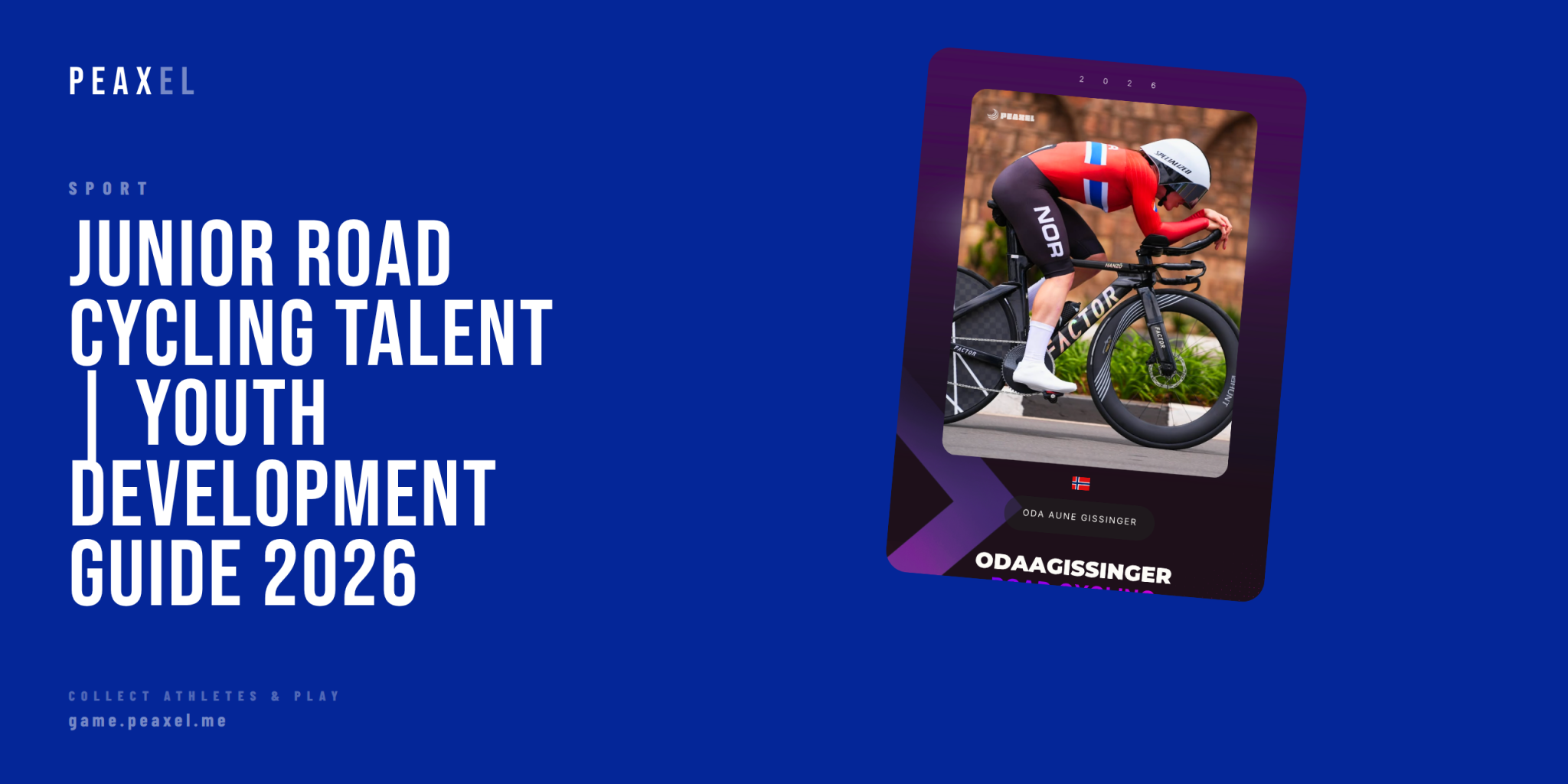
Athletes like Oda Aune Gissinger exemplify modern junior cycling development. The Norwegian rider won the Grand Prix CERATIZIT Women Junior in 2025, claimed the Norwegian Junior National Championship in time trial, and earned bronze at the UCI Junior Road World Championships—all before transitioning to continental team racing with Hitec Products-Fluid Control. Her trajectory illustrates how junior success translates into professional opportunity. Follow her development through the Peaxel game as she progresses toward WorldTour competition.
Such athletes represent the broader trend of junior cycling producing increasingly competitive fields. Depth of talent has expanded globally, making junior world championships genuinely unpredictable while raising the standard required for professional transition.
The Future of Junior Cycling Development
Junior road cycling continues evolving with technology integration, improved coaching methodologies, and expanded international competition access. Power meter data allows precise training prescription while race analytics help young riders understand tactical patterns. These tools accelerate learning curves that previously required years of race experience to develop.
For cycling fans seeking the next generation of champions, junior racing offers authentic insight into future professional pelotons. The athletes dominating today’s junior world championships will likely contest grand tours within five years—making early attention both rewarding and strategic for engaged followers.