Understanding Professional Wrestling Match Formats
Professional wrestling combines athletic performance with dramatic storytelling, but beneath the spectacle lies a structured system of match formats and win conditions. Whether you are watching a British independent show or a major European promotion, understanding these rules transforms how you experience each bout.
The sport operates across dozens of distinct match types, each with specific rules that determine how a wrestler can win, lose, or retain a championship. From the standard singles match to elaborate multi-person stipulation bouts, every format serves a narrative and competitive purpose.
Standard Win Conditions in Professional Wrestling
Pinfall
The pinfall remains the most common victory method in professional wrestling. A wrestler must hold their opponent’s shoulders to the mat while the referee counts to three. Both shoulders must remain down for the entire count, and the defending wrestler can break the pin by lifting a shoulder, reaching the ropes, or having a foot placed under the bottom rope.
Championship matches often feature enhanced pinfall rules, including two-out-of-three falls or extended count requirements in certain promotions.
Submission
A submission victory occurs when a wrestler forces their opponent to verbally surrender or physically tap out while trapped in a hold. Classic submission maneuvers include the armbar, sleeper hold, sharpshooter, and various choke variations. The referee monitors for verbal submission or the tapping motion and immediately calls for the bell.
Some wrestlers build their entire offense around submission finishing moves, making every lock-up a potential match-ending threat.
Count Out
When wrestlers battle outside the ring, a referee begins counting. In most promotions, wrestlers have ten or twenty counts to return to the ring. If a competitor fails to re-enter before the count completes, they lose by count out. However, championships typically cannot change hands via count out, protecting title holders from strategic losses.
Disqualification
Illegal actions trigger disqualification losses. Common infractions include using weapons, interference from outside parties, low blows, excessive violence in protected areas, and refusing to break holds when an opponent reaches the ropes. Like count outs, disqualifications usually protect championship holders from losing their titles.
Popular Match Types Across Promotions
Singles Matches
The one-on-one format showcases individual skill and storytelling. Standard singles matches run between ten and thirty minutes depending on card placement, with main events often receiving extended time limits. Championship singles matches may have no time limit or feature special stipulations added by authority figures.
Tag Team Matches
Tag team wrestling requires partners to work together, with only one legal competitor per team in the ring at any time. Legal tags occur when partners make physical contact, typically by slapping hands. Blind tags—where a partner tags without the opponent’s knowledge—create strategic advantages.
Promotions enforce different tag team rules. Some require tags in the corner only, while others allow tags anywhere along the ring apron. Tornado tag matches eliminate tag requirements entirely, allowing all participants to compete simultaneously.
Cage Matches
Steel cage matches surround the ring with a metal structure, preventing outside interference and escape. Win conditions vary by promotion: some require pinfall or submission inside the cage, while others allow victory by escaping over the top or through the door. The cage adds both a weapon element—wrestlers can be driven into the steel—and a dramatic escape dynamic.
Ladder Matches
Ladder matches suspend the prize—typically a championship belt or contract—above the ring. Competitors must climb a ladder to retrieve the object, with no pinfalls or submissions counting. These high-risk bouts feature dramatic falls and innovative offense using the ladders themselves.
Battle Royals and Royal Rumble Formats
Multi-person elimination matches pit numerous wrestlers against each other simultaneously. Elimination occurs when a wrestler is thrown over the top rope with both feet touching the floor. Variations include timed entry formats where new competitors enter at intervals, building drama as the field grows and shrinks.
Championship Match Modifications
Title matches carry modified rules designed to protect championship prestige. Most promotions enforce title retention on disqualification and count out losses, meaning the champion keeps the belt even when losing by these methods. This forces challengers to secure clean victories.
Some championships feature specific defense requirements—European traditions sometimes mandate regular title defenses or risk being stripped of the belt. Championship matches may also feature championship committees or special referees assigned to ensure fair competition.
Time Limits and Draw Conditions
Professional wrestling matches operate under announced or unofficial time limits. When time expires without a decisive winner, the match ends in a draw. Championship draws typically mean the champion retains their title. Extended overtime periods or sudden death rounds may be added for high-stakes encounters.
Time limit draws serve storytelling purposes, establishing competitive equality and building toward rematch scenarios.
The Role of Referees
Referees enforce rules, count pins, check for submissions, administer counts, and call for disqualifications. Different promotions empower referees with varying authority levels. Some allow referee discretion on borderline infractions, while others enforce strict rule interpretation.
Referee positioning matters strategically—wrestlers may attempt illegal tactics when the official’s view is blocked, adding psychological elements to match psychology.
European Independent Wrestling Today
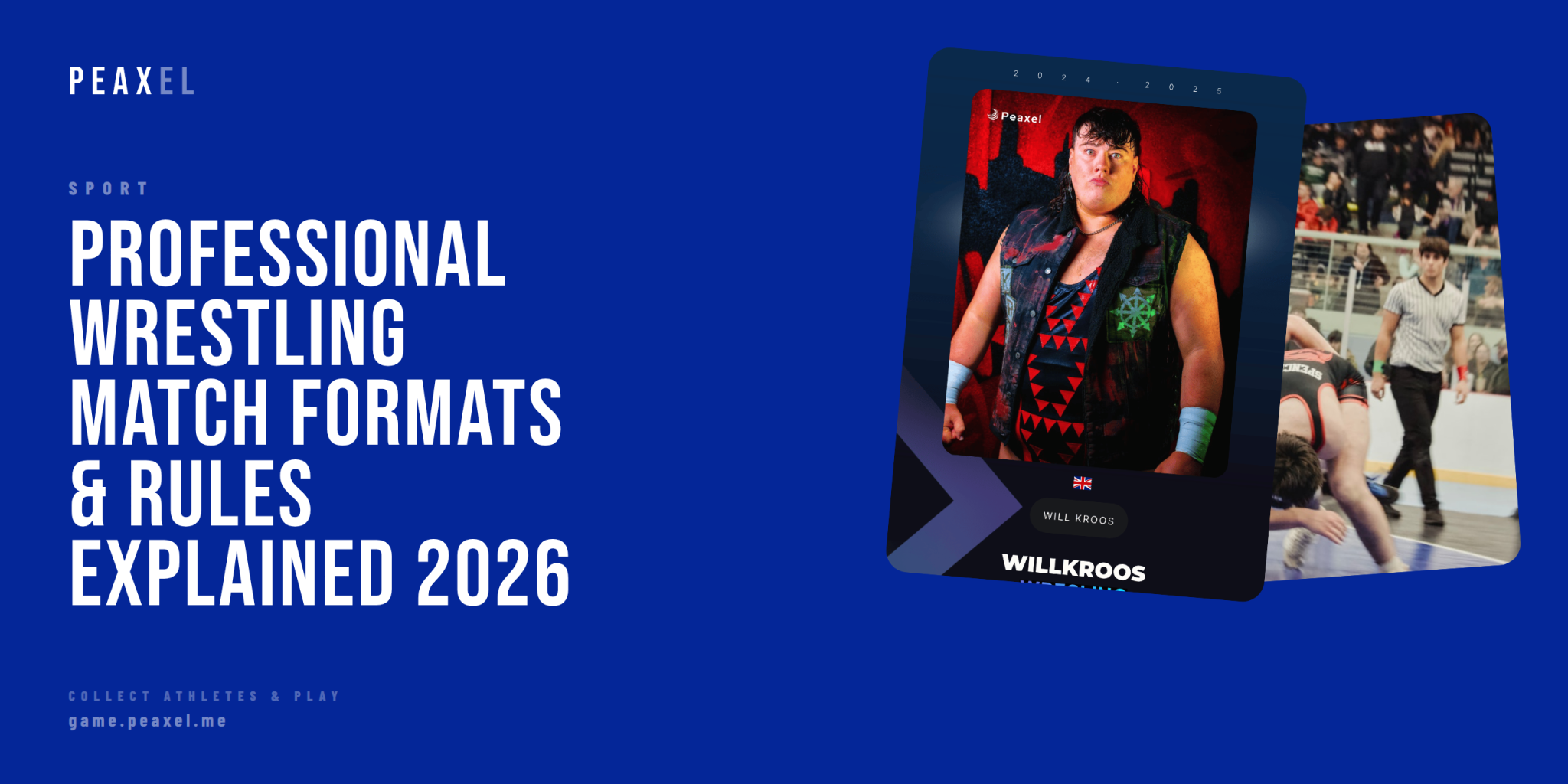
The European independent wrestling scene features athletes like Will Kroos, who has competed across British promotions including Fight Factory Wrestling and British Wrestling Revolution since 2017. Standing 6’3″ and 275 pounds, Kroos combines heavyweight power with surprising agility, utilizing his signature Kroosification piledriver variant to secure victories.
In Germany, Westside Xtreme Wrestling (wXw) has developed talents like Danny Fray, a 6’5″ powerhouse who debuted in 2021 after training at the wXw Academy. Fray’s arsenal includes the Big Boot, Black Hole Slam, and Samoan Drop, establishing him as a rising force in German professional wrestling.
These athletes represent the diverse talent competing across professional wrestling scenes worldwide, each bringing unique styles shaped by their training backgrounds and regional wrestling cultures.
Why Match Formats Matter for Fans
Understanding match formats transforms passive viewing into active analysis. Recognizing when a count out or disqualification protects a champion, anticipating submission setups, or appreciating ladder match risk-taking deepens appreciation for professional wrestling as both athletic competition and performance art.
For those interested in following professional wrestlers and building knowledge of the sport’s competitive landscape, platforms like Peaxel offer ways to discover and engage with athletes across the wrestling world.