Why the Mind Wins Before the Body in Muay Thai
Muay Thai is often called the art of eight limbs for its devastating use of fists, elbows, knees, and shins. But ask any seasoned fighter what separates champions from contenders, and they will tell you the same thing: the mental game decides everything. Physical conditioning gets you into the ring. Psychological mastery keeps you standing when everything tells you to quit.
In 2026, as Muay Thai continues its global expansion through organizations like ONE Championship and the Rajadamnern World Series, the sport’s mental demands have never been more scrutinized. Fighters today train their minds as rigorously as their bodies, drawing on centuries of Thai tradition and modern sports psychology.
The Buddhist Roots of Mental Training
Traditional Muay Thai training in Thailand has always included elements of mental conditioning rooted in Theravada Buddhism. Fighters meditate before and after training sessions, cultivating mindfulness that translates directly into ring awareness. The Wai Kru Ram Muay—the ceremonial dance performed before each bout—is not just tradition. It serves as a moving meditation that centers the fighter and clears the mind of fear.
Temples like Wat Bang Phra near Bangkok have blessed generations of fighters with Sak Yant tattoos, believed to provide spiritual protection and mental fortitude. Whether one believes in the mystical properties, the ritual itself creates a psychological anchor that fighters carry into battle.
Controlling Fear and Aggression
Fear is universal in combat sports. The fighter who claims to feel nothing before a bout is either lying or dangerously disconnected. Elite Muay Thai practitioners do not eliminate fear—they channel it. Controlled breathing techniques, often synchronized with shadowboxing, help regulate the nervous system and prevent adrenaline from spiking too early.
Aggression management is equally critical. Muay Thai rewards calculated strikes over wild swings. Fighters train to maintain emotional equilibrium even when hurt, knowing that an angry response creates openings for a composed opponent. The Thai concept of “jai yen” (cool heart) describes this ideal state: calm under fire, decisive without desperation.
Visualization and Mental Rehearsal
Modern sports psychology has validated what Thai trainers have known for decades: visualization works. Fighters mentally rehearse combinations, defensive movements, and even victory celebrations. This mental practice strengthens neural pathways, making physical execution more automatic under pressure.
Research published in the Journal of Sports Sciences confirms that athletes who combine physical and mental practice outperform those who rely on physical training alone. In Muay Thai, where split-second timing determines outcomes, this edge is decisive.
International Fighters Embracing the Mental Game
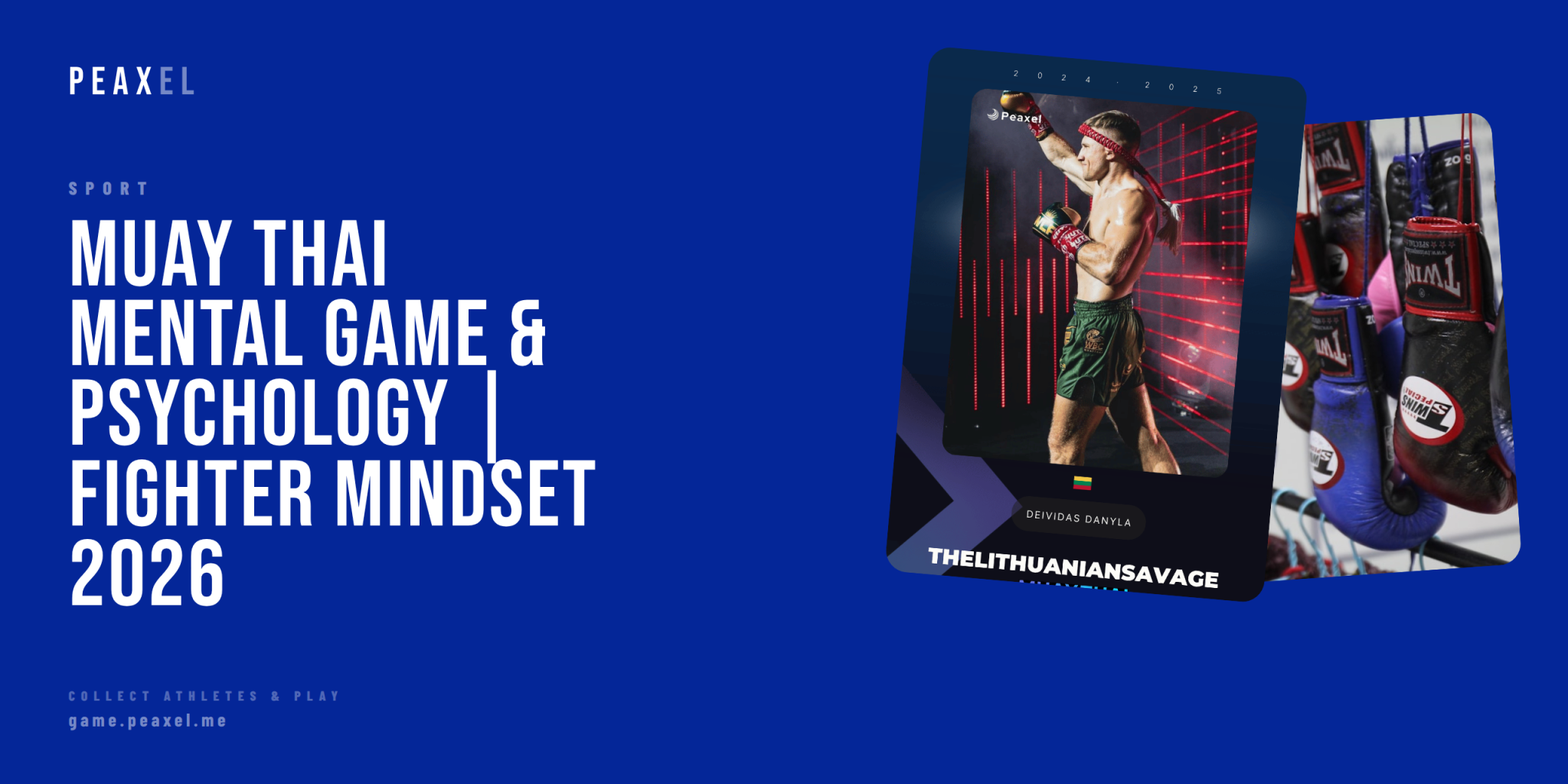
The globalization of Muay Thai has brought fighters from every continent into traditional Thai gyms. Deividas Danyla, the Lithuanian fighter known as “The Lithuanian Savage,” traveled to Thailand in 2015 specifically to immerse himself in the sport’s culture. His subsequent victories—including the IMC Muay Thai World Championship and bouts in ONE Championship against elite opponents like Saemapetch Fairtex—reflect the mental toughness developed through authentic Thai training. You can follow his career on Peaxel.
Similarly, Kutluhan Sormagec of Turkey has tested himself at the legendary Rajadamnern Stadium in Bangkok, facing pressure that only the sport’s most historic venue can produce. Competing internationally at 185 cm in the middleweight division, Sormagec exemplifies the mental resilience required to represent a non-traditional Muay Thai nation on the global stage. Track his journey on Peaxel.
The Pressure of Elite Competition
Fighting at the highest level introduces psychological pressures that local gym sparring cannot replicate. Crowd noise, broadcast cameras, and career implications create an environment where mental preparation becomes survival. ONE Championship’s Super Series and the revitalized Rajadamnern World Series have raised stakes—and purses—considerably, attracting fighters who must manage not just opponents but expectations.
Sports psychologists working with combat athletes emphasize pre-fight routines that create consistency. Whether it involves specific music, warm-up sequences, or breathing patterns, these rituals provide mental anchors that reduce uncertainty and anxiety.
Recovery and Mental Health
The mental game extends beyond fight night. Losing in combat sports carries unique psychological weight. Fighters must process defeat without letting it damage confidence for future bouts. Thai camps traditionally emphasize acceptance and forward focus—dwelling on losses is considered counterproductive.
In recent years, conversations about mental health in combat sports have become more open. Organizations now provide resources for fighters dealing with anxiety, depression, or the psychological effects of repeated head trauma. This evolution reflects a maturing understanding that sustainable careers require mental wellness, not just physical durability.
Training the Mind for New Fans
For those new to Muay Thai, understanding the mental dimension adds depth to viewing. Watch for fighters who maintain composure after absorbing significant strikes. Notice how champions control ring position without appearing frantic. These subtle indicators often predict outcomes more reliably than raw athleticism.
The sport rewards students who appreciate its complexity. Peaxel offers a gateway into following fighters like Danyla and Sormagec, building fantasy teams around athletes whose mental game matches their physical arsenal. Explore the full range of combat sports and other disciplines on the complete sports list.
The Future of Mental Training in Muay Thai
As Muay Thai continues expanding globally, expect mental training methodologies to evolve. Biofeedback devices that monitor heart rate variability during sparring, virtual reality simulations of high-pressure scenarios, and personalized sports psychology programs are already entering elite camps. The fighters who integrate these tools while honoring traditional Thai mental conditioning will define the sport’s next era.
Muay Thai has always been more than violence. It is discipline, strategy, and above all, mental mastery. The art of eight limbs begins in the mind—and that is where champions are forged.