What Is Wingfoil and Why Is Everyone Talking About It?
Wingfoil, also known as wing foiling, is a water sport that combines a handheld inflatable wing with a hydrofoil board. Riders use wind power captured by the wing to propel themselves across the water while the hydrofoil lifts the board above the surface. The result is a sensation often described as flying over water with remarkable speed and freedom.
The sport emerged around 2019 and has experienced explosive growth. It draws elements from windsurfing, kiteboarding, and stand-up paddleboarding while creating something entirely new. Unlike kiteboarding, there are no lines connecting you to a kite in the sky. The wing is held directly in your hands, giving riders immediate and intuitive control.
How Wingfoil Actually Works
At its core, wingfoil requires three pieces of equipment: a wing, a board, and a hydrofoil. The wing is an inflatable structure with handles that catches wind. The board sits on top of a hydrofoil, which consists of a mast and underwater wings that generate lift as speed increases.
When a rider builds enough speed, the foil lifts the board completely out of the water. This reduces drag dramatically, allowing riders to glide smoothly even in light wind conditions. The feeling is unlike any other board sport because you are genuinely elevated above the water surface.
The Learning Curve
Wingfoil is considered more accessible than kiteboarding for beginners. There are no complex line systems to manage, and crashes tend to be gentler since you simply fall into water without being pulled by a kite. Most riders with board sport experience can get up on the foil within a few sessions.
Competition Formats: Freestyle and Racing
The GWA Wingfoil World Tour is the premier competitive circuit for the sport. It features two main disciplines that test completely different skills.
Surf-Freestyle
In freestyle competitions, riders perform tricks and maneuvers while riding waves or in flat water. Judges score based on technical difficulty, execution, style, and variety. Athletes perform jumps, rotations, and combinations that push the boundaries of what is possible with a wing and foil.
Surf-Slalom and Racing
Racing disciplines focus on speed around a marked course. Riders compete head-to-head or against the clock, navigating buoys while maximizing efficiency and tactical positioning. This format rewards pure speed, foil control, and strategic decision-making in varying wind conditions.
Athletes Driving the Sport Forward
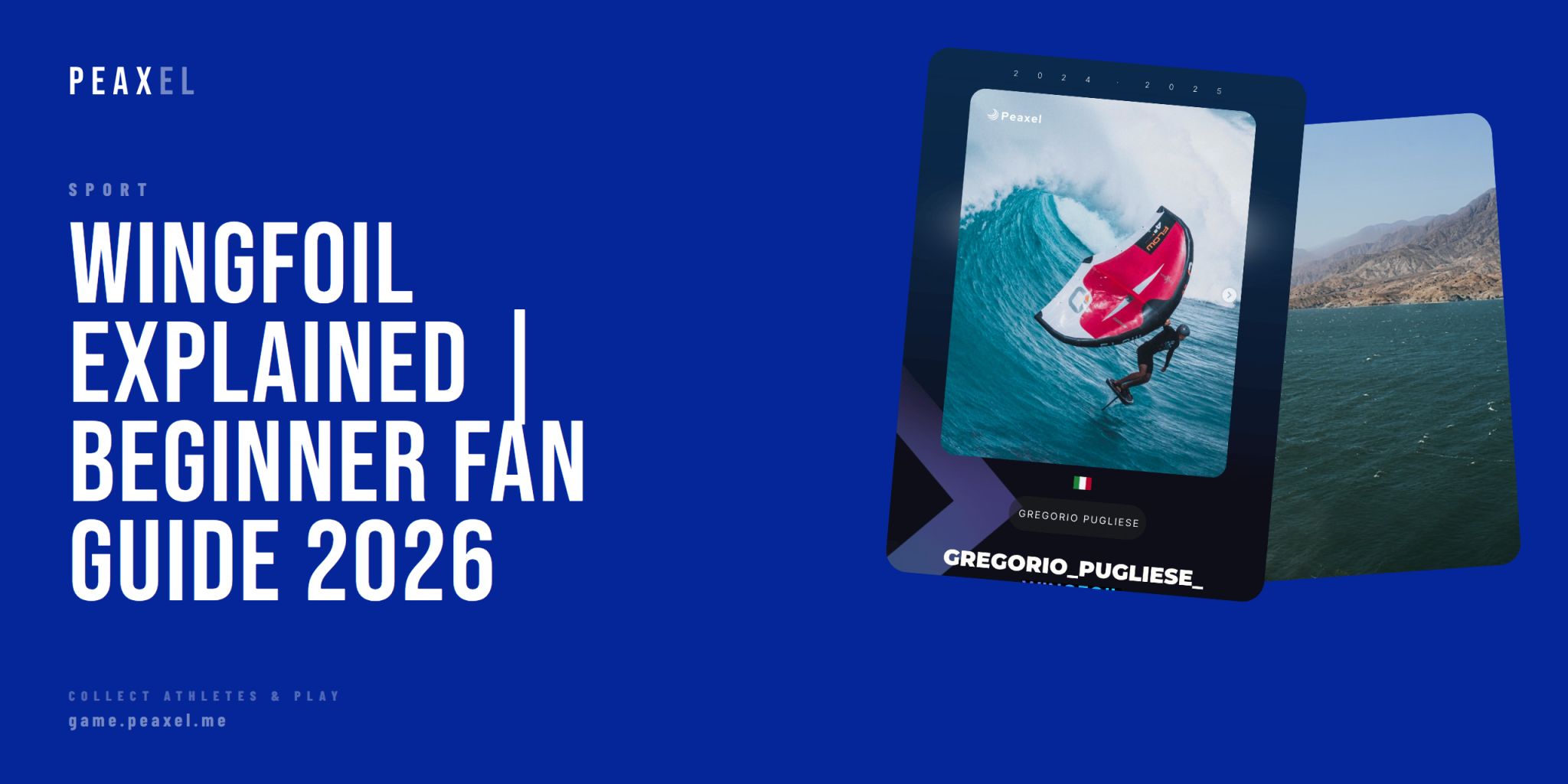
The wingfoil community includes athletes transitioning from windsurfing and kiteboarding backgrounds. Italian rider Gregorio Pugliese exemplifies this pathway. He started windsurfing at age 12, discovered wingfoil in 2020 while working as an instructor, and quickly established himself on the GWA World Tour competing in both freestyle and race categories.
By 2022, Pugliese had reached ninth place in the overall GWA standings, competing at the highest level in events from Tarifa to Brazil. His journey from windsurf instructor to professional wingfoiler happened in just two years, demonstrating how quickly talented athletes can rise in this young sport. You can follow his competitive journey and add him to your team on Peaxel.
Why Fans Are Getting Hooked
Wingfoil offers something visually spectacular. Watching athletes seemingly fly above the water surface while performing aerial maneuvers creates compelling content that translates well to both live events and digital platforms. The sport is inherently photogenic.
For fans coming from other wind sports, wingfoil feels familiar yet fresh. The skills transfer, but the experience is distinct. For newcomers to water sports entirely, wingfoil provides an entry point that does not require years of prerequisite training in other disciplines.
Growing Global Presence
Events now take place across multiple continents, from European coastal spots like Tarifa, Spain to tropical locations in Brazil and beyond. This global footprint means fans can follow competitions throughout the year as the tour moves to wherever conditions are optimal.
Equipment Basics for Understanding the Sport
Wing sizes typically range from 3 to 7 square meters depending on wind strength and rider weight. Larger wings generate more power in light wind, while smaller wings provide control in stronger conditions. Riders often own multiple wing sizes to cover different conditions.
Foil selection affects ride characteristics significantly. Larger front wings provide stability and early lift, making them better for beginners or light wind. Smaller, higher-aspect wings deliver speed and responsiveness for advanced riding and racing. Board volume also varies based on rider skill and conditions.
What Makes Wingfoil Different from Kiteboarding
The most significant difference is the absence of lines. In kiteboarding, you control a kite flying 20 to 30 meters above you through a bar connected by lines. In wingfoil, the wing is in your hands. This direct connection provides immediate feedback and simpler setup.
Safety profiles differ as well. Kiteboarding carries risks associated with line tangles and being pulled by a powerful kite in unexpected gusts. Wingfoil incidents typically result in the rider simply separating from the wing and falling into water. The wing itself has no ability to pull you once released.
The Future of Wingfoil
Industry observers have noted discussions about potential Olympic inclusion. The sport ticks many boxes: it is visually exciting, has a clear competitive structure, and enjoys growing global participation. Whether or not Olympic recognition comes, the competitive circuit continues expanding.
Equipment innovation remains rapid. Brands release new wing designs, foil configurations, and board shapes each season. This constant development keeps the sport dynamic and rewards athletes who adapt quickly to technological advances.
How to Follow Wingfoil in 2026
The GWA Wingfoil World Tour streams events live and posts highlights across social platforms. Following athletes directly provides behind-the-scenes access to training, travel, and competition preparation. The community remains accessible, with professionals often engaging directly with fans.
For those interested in tracking wingfoil athletes alongside competitors from dozens of other sports, Peaxel offers a platform where fans can discover emerging talent and build fantasy teams that include wingfoilers like Gregorio Pugliese competing on the world stage.