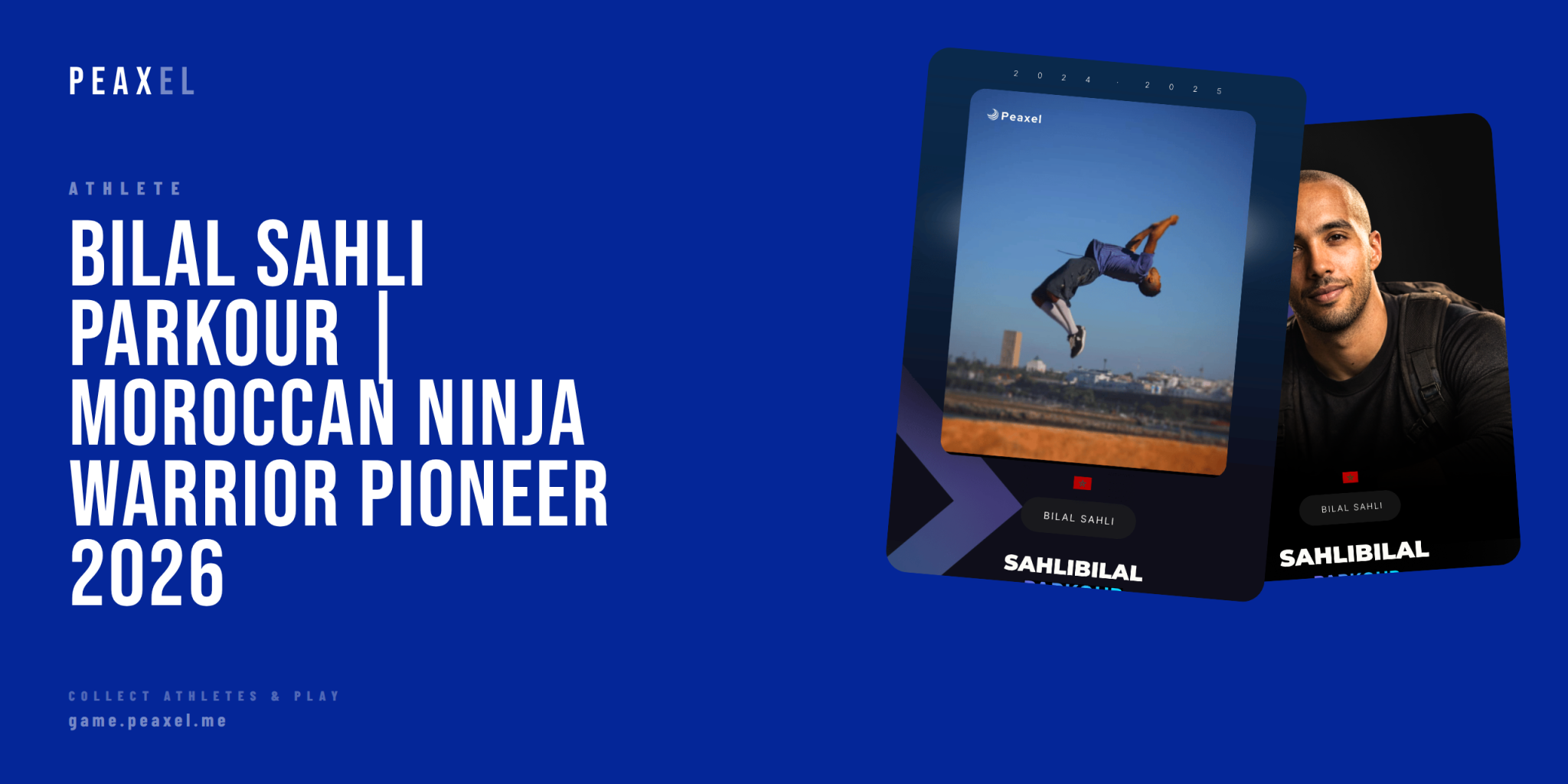
From YouTube Videos to Parkour Pioneer
In 2005, a young man from Kenitra, Morocco watched videos of David Belle leaping across Parisian rooftops. That moment ignited something that would reshape an entire country’s relationship with urban movement. Bilal Sahli, who would later earn the nickname “Shuriken,” began training alone in his hometown, teaching himself the foundational movements of parkour without coaches, gyms, or community.
What started as solitary practice sessions evolved into Morocco’s most significant parkour movement. Bilal’s dedication attracted other practitioners, and by 2007, he had gathered enough like-minded athletes to form Helala Parkour—one of the first organized parkour crews in North Africa.
Building Morocco’s Parkour Infrastructure
The formation of Helala Parkour marked just the beginning of Bilal’s infrastructure-building work. While many athletes focus solely on personal progression, Bilal recognized that parkour in Morocco needed institutional support to survive and grow. His vision extended beyond individual achievement to community development.
In 2015, Bilal co-founded UP Movement, assembling a team of Morocco’s strongest practitioners. The crew’s technical abilities and professional approach caught international attention, leading to a historic sponsorship deal with the World Freerunning Parkour Federation (WFPF). UP Movement became the first Moroccan team to receive WFPF backing—a validation that elevated the entire Moroccan parkour scene on the global stage.
The WFPF Partnership Impact
The WFPF sponsorship provided more than financial support. It connected Moroccan athletes to international competition circuits, training methodologies, and a global network of practitioners. For a scene that had developed largely in isolation, this partnership opened doors that individual talent alone could not.
Ninja Warrior Arabia: A Historic First
Bilal Sahli’s athletic capabilities reached their most visible peak in 2017 on the set of Ninja Warrior Arabia. The obstacle course competition, adapted from the Japanese Sasuke format, had never seen an Arab athlete complete its notoriously difficult first stage. Bilal changed that permanently.
His successful completion of stage one made him the first Arab athlete in Ninja Warrior Arabia history to advance past the opening round. The achievement resonated far beyond the competition itself—it demonstrated that parkour athletes from the Arab world could compete at the highest levels of obstacle course racing, a discipline that demands the exact skills parkour develops: explosive power, grip strength, spatial awareness, and mental composure under pressure.
Technical Demands of the Course
Ninja Warrior’s first stage combines elements that test every aspect of a parkour athlete’s training. Quintuple steps require precise footwork and forward momentum. The rolling log demands core stability and balance. Warped walls test explosive vertical power. For Bilal, years of training on Moroccan streets had prepared him for exactly these challenges.
From Athlete to Federation Leader
Many elite athletes retire from competition and fade from their sports. Bilal Sahli took a different path. His transition from competitor to administrator has positioned him to shape Moroccan parkour’s future at the institutional level.
As technical director of the Fédération Royale Marocaine de Skate, Roller, Trottinette et Sports Urbains (FRMSU), Bilal now oversees the development frameworks for multiple urban sports disciplines across Morocco. The role places him at the intersection of government recognition, athlete development, and competition organization.
Head of the Parkour Committee
Within FRMSU, Bilal chairs the Parkour committee specifically. This position gives him direct influence over how parkour is taught, judged, and promoted throughout the country. His two decades of experience—from self-taught beginner to international competitor to team founder—inform policies that affect every Moroccan practitioner.
The Kenitra to Global Stage Pipeline
Bilal’s journey from Kenitra illustrates a pathway that barely existed when he started. Today, young Moroccan athletes have structured competitions, federation recognition, and role models who have succeeded internationally. The infrastructure Bilal helped build creates opportunities he never had.
National competitions now offer Moroccan practitioners regular chances to test their skills against peers. Federation backing provides legitimacy that helps athletes secure training spaces, avoid legal issues with property owners, and gain family support for their athletic pursuits.
Parkour’s Growing Global Recognition
Bilal Sahli’s career spans parkour’s transformation from underground subculture to recognized sport. When he started in 2005, parkour existed primarily through viral videos and informal gatherings. Today, international federations govern competition formats, Olympic inclusion discussions continue, and professional athletes build sustainable careers.
Morocco’s parkour development mirrors broader trends across Africa and the Middle East. Athletes from these regions increasingly compete at world-level events, challenging European dominance in a discipline that originated in French suburbs. Bilal’s Ninja Warrior achievement and federation work contributed directly to this regional emergence.
Competition Format Evolution
Modern parkour competitions divide into speed runs—timed courses emphasizing efficiency—and freestyle events rewarding creativity and technical difficulty. Athletes like Spain’s Jesús Ocaña, who placed second in speed at the 2022 Parkour Spain Series with a 28.45-second run, represent the competitive intensity these formats now demand.
Two Decades of Dedication
Twenty years after watching those first David Belle videos, Bilal Sahli has built a legacy that extends far beyond personal achievements. The Helala Parkour crew he founded. The UP Movement team that earned international sponsorship. The Ninja Warrior record that proved Arab athletes belonged on global stages. The federation position that shapes policy for an entire country’s urban sports community.
Each milestone built upon the last, creating a career arc that demonstrates how individual passion can transform into institutional change. For the next generation of Moroccan parkour athletes, Bilal’s work means they start with advantages he created from nothing.
Discover Bilal Sahli on Peaxel and explore the full range of parkour and urban sports athletes competing at the highest levels worldwide.