What Makes Rally Racing Different From Other Motorsports
Rally racing stands apart from circuit racing in almost every way imaginable. Instead of laps around a closed track, drivers tackle point-to-point stages on public roads that have been temporarily closed. These stages run through forests, mountains, deserts, and even city centers—each presenting completely different challenges.
The essence of rally lies in its unpredictability. Drivers face gravel, mud, snow, ice, and asphalt—sometimes all within the same event. Unlike Formula 1 or NASCAR where competitors race wheel-to-wheel, rally drivers start at intervals and race against the clock. The fastest cumulative time across all stages wins.
This format demands a unique combination of raw speed, car control, and mental resilience. One mistake on a narrow forest road can end an entire weekend. That high-stakes pressure is exactly what draws millions of fans worldwide.
Understanding the Rally Weekend Format
Recce and Shakedown
Before any competitive driving begins, crews participate in reconnaissance—called “recce” in rally terminology. During recce, drivers and co-drivers travel the stages at controlled speeds to create their pacenotes. These handwritten notes describe every corner, crest, and hazard they’ll encounter at full racing speed.
Shakedown follows recce and gives teams a short test stage to finalize car setup. It’s the last chance to adjust suspension, differentials, and tire choices before the rally begins officially.
Special Stages
The competitive action happens during special stages (SS). Each stage is timed to the tenth of a second. Stages vary in length from 5 kilometers to over 50 kilometers, with longer stages testing endurance and concentration as much as outright speed.
A typical WRC event includes 15 to 25 special stages spread across three days. Stages are grouped into legs, with service parks scheduled between legs where mechanics can repair and maintain the cars under strict time limits.
The Power Stage
The final stage of each rally carries extra significance. The Power Stage awards bonus championship points to the five fastest drivers—5 points for first, down to 1 point for fifth. This creates dramatic finishes even when overall positions seem settled, as drivers push maximum attack for those extra points.
How Rally Scoring and Championships Work
The World Rally Championship awards points based on final overall positions. First place earns 25 points, second gets 18, and the scale continues down to 10th place receiving 1 point. Power Stage bonus points are added on top.
Both drivers and manufacturers compete for separate championship titles. Manufacturer points come from the two highest-placed cars from each team, making consistency across both entries crucial for brands like Toyota, Hyundai, and M-Sport Ford.
The 2026 WRC calendar spans 14 events across four continents. Rallies like Monte Carlo test icy alpine roads, Safari Rally Kenya challenges crews with African savanna terrain, and Rally Japan closes the season with technical asphalt stages.
The Co-Driver: Rally’s Unsung Hero
No rally driver succeeds alone. The co-driver sits alongside, reading pacenotes at incredible speed while the car slides through corners at 180 kilometers per hour. Their calls describe corner severity (rated 1 to 6, with 1 being tightest), distance to hazards, and surface changes.
A typical pacenote call might sound like: “100, left 4 tightens to 2, don’t cut, 50, crest jump maybe, right 5 long opens over crest.” The co-driver delivers this information with perfect timing, giving the driver just enough warning to react.
Trust between driver and co-driver must be absolute. The driver often cannot see the road ahead due to crests, dust, or darkness. They rely entirely on their co-driver’s voice to know what’s coming.
Rally Car Categories Explained
Rally1 Hybrid Cars
The top category in WRC uses Rally1 regulations introduced in 2022. These cars combine 1.6-liter turbocharged engines with hybrid systems producing around 500 horsepower combined. The hybrid unit provides electric boost and enables limited electric-only driving in service parks and road sections.
Rally1 cars feature sophisticated aerodynamics, sequential gearboxes, and advanced four-wheel-drive systems. Toyota GR Yaris, Hyundai i20 N, and Ford Puma comprise the current manufacturer entries.
Rally2 and National Categories
Below Rally1, the Rally2 category serves as the primary feeder series. These cars lack hybrid systems but remain highly competitive, producing around 290 horsepower. Many national championships and WRC support categories use Rally2 machinery.
Regional and national series often feature Rally3, Rally4, and Rally5 categories with progressively lower performance levels. This ladder system allows drivers to develop skills and progress toward the WRC.
Following Rally as a New Fan
Modern rally coverage makes following the sport easier than ever. WRC+ streaming service offers live stage coverage, onboard cameras, and timing data. Social media accounts from teams and drivers provide behind-the-scenes content throughout each event.
For fantasy sports enthusiasts, rally offers engaging options. Predicting stage winners, overall positions, and retirement drama creates compelling competition among fans. Platforms like Peaxel feature rally athletes alongside other motorsport disciplines, letting fans build teams and compete as virtual managers.
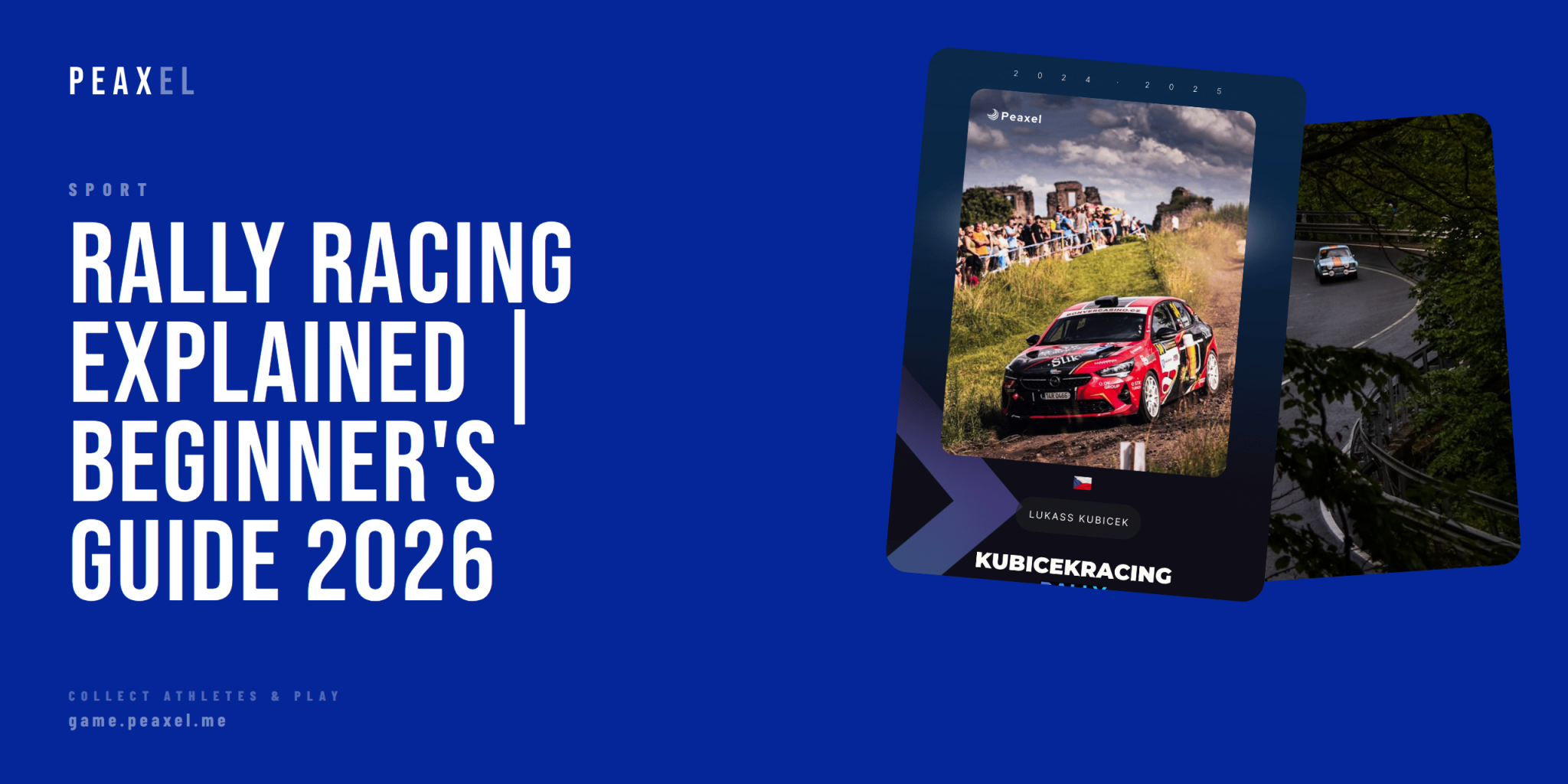
Czech rally driver Lukass Kubicek represents the national championship level where many future WRC stars develop their craft. Following drivers through their career progression adds another layer of engagement for dedicated fans.
Why Rally Racing Captivates Fans Worldwide
Rally’s appeal comes from its accessibility and authenticity. Spectators can stand meters from the action in forests and fields—an intimacy impossible in most motorsports. The cars themselves resemble production vehicles, creating connection between fans’ road cars and competition machines.
The human element dominates rally narratives. Unlike circuit racing where car performance often determines results, rally rewards driver skill above almost everything else. Watching a driver wrestle a sliding car through a snow bank or recover from a spin demonstrates talent that pure lap times cannot capture.
As the 2026 season unfolds across gravel, asphalt, and snow, rally racing continues proving why it remains motorsport’s ultimate test of man and machine against nature. For new fans ready to explore this world, the complete list of sports on Peaxel offers a starting point to discover rally athletes and begin your journey into this extraordinary sport.