The Inconvenient Truth About Elite Sport
Let’s start with a number.
$50,000.
That is approximately what a world-class freeride skier — a genuine top-ten-in-the-world athlete in their discipline — can expect to earn in a strong year from their sport. Before expenses. Before travel. Before equipment. Before the cost of the avalanche safety gear that keeps them alive while they perform at the level that justifies calling them world-class.
For context: the average NBA bench player — someone who may not play a single minute in a given game — earns approximately $2.1 million per year.
Both are professional athletes. Both have dedicated their lives to their sport. Both perform at the absolute peak of human capability in their respective disciplines.
The gap between their economic realities is not a reflection of their athletic merit. It is a reflection of broadcast infrastructure, historical accident, and a sports economy that has never been designed with fairness as a priority.
In 2026, that is starting to change. But it is not changing fast enough. And before it can change at scale, the problem needs to be named clearly.
Here are the 10 most underpaid categories of athletes in the world in 2026 — the disciplines where the gap between athletic achievement and economic reward is widest, most unjust, and most urgently in need of a structural solution.
1. Freeride Skiers — World-Class Performance, Subsistence Wages
Freeride skiing sits at the intersection of everything a sport needs to produce compelling content — extraordinary visual spectacle, genuine mortal risk, elite physical performance, and a natural environment so beautiful it functions as its own production value.
And yet the economics of professional freeride skiing in 2026 remain, for the vast majority of athletes on the circuit, genuinely precarious.
The Freeride World Tour Pro is the pinnacle of competitive big mountain skiing. Athletes who qualify for the tour have demonstrated a level of technical skill, risk assessment, and physical capability that is legitimately world-class by any standard. They have competed through a multi-year qualifier system. They have posted performances on some of the most demanding mountain terrain on earth. They have earned their place at the top of their sport.
The prize money available at FWT Pro events in 2026 ranges from approximately $3,000 to $15,000 per event for top finishes. The season spans multiple events across multiple continents. The travel costs alone can consume a significant portion of prize earnings for athletes without major sponsor support.
The sponsorship landscape for freeride athletes has improved in recent years — brands like HEAD, Peak Performance, Atomic, and Salomon invest meaningfully in their FWT rosters — but the reality for athletes outside the top five or six on the tour is a sponsorship package that covers equipment and some travel without providing a livable income.
Many FWT athletes work part-time jobs during the off-season. Some teach skiing. Some work in construction. Some supplement income with social media content creation — which is increasingly the most reliable revenue stream available to them, independent of competitive results.
The number that matters: A realistic annual income for a mid-tier FWT Pro athlete in 2026 — combining prize money, sponsorship, and content revenue — sits between $20,000 and $45,000. In the Alpine markets where most of these athletes live and train, this is below the cost of a comfortable life.
What needs to change: The broadcast infrastructure for freeride skiing is growing. FWT livestreams attract meaningful audiences. The social media reach of the sport’s top athletes is significant. The value being generated by these athletes is real — it is simply not flowing back to them in proportion to their contribution.
2. Professional Karate Athletes — Olympic Exclusion, World-Class Commitment
Karate’s removal from the Olympic program after Paris 2024 has had direct economic consequences for the athletes who dedicate their lives to the discipline.
The Olympic inclusion cycle between 2021 and 2024 brought a period of increased investment into karate infrastructure — national federation funding, increased sponsorship attention, broadcast deals that made the discipline briefly visible to mainstream sports audiences. With Olympic exclusion, much of that infrastructure has contracted.
What has not contracted is the commitment of the athletes themselves.
The Karate 1 Premier League circuit continues to attract world-class competition. The discipline’s World Championships remain among the most technically demanding competitions in martial arts. Athletes from Japan, Spain, France, Egypt, Azerbaijan, and increasingly Southeast Asia compete at a level that would be immediately recognized as elite by any informed sports observer.
The economic reality for most professional karate athletes in 2026 is stark. Outside Japan — where the discipline has a professional infrastructure independent of the Olympic cycle — and a small number of European nations with strong federation support, professional karate athletes are largely self-funded.
The number that matters: The Karate 1 Premier League — the sport’s premier professional circuit — offers prize money ranging from $2,000 to $10,000 per event for top finishers. For an athlete competing on the full international calendar, prize money alone rarely covers competition expenses. Sponsorship outside Japan, Spain, and France is minimal for all but the top handful of global names.
A realistic annual income for a world top-20 karate athlete outside Japan — combining prize money, federation support, and whatever private sponsorship they can attract — sits between $15,000 and $35,000 in most markets. Many supplement this with coaching income or other employment.
What needs to change: Karate’s technical complexity, its visual appeal in competition, and the genuine physical and psychological demands of the discipline at elite level make it exactly the kind of sport that deserves a broader economic infrastructure. The post-Olympic period is an opportunity to build something more sustainable — a fan-driven economic model that is not dependent on the four-year Olympic visibility cycle.
3. Parkour Athletes — A World Championship Sport With No Professional Economy
Parkour in 2026 has a World Championship. It has a global participation base numbering in the tens of millions. It has some of the most compelling social media content of any discipline in the world. It has a generation of athletes who are, by any reasonable technical standard, elite professional competitors.
What it does not have is a functioning professional economy.
The first FIG Parkour World Championships represent a landmark moment for the discipline’s institutional recognition. But institutional recognition and economic infrastructure are not the same thing. The prize money available at world championship level parkour events in 2026 is negligible by any comparison with mainstream sports — and in many cases does not cover the travel costs athletes incur to compete.
The honest reality is that virtually every professional parkour athlete in 2026 generates the majority of their income from sources other than competition: social media content, coaching, brand partnerships built on their content presence rather than their competitive results, and in some cases entirely unrelated employment.
The athletes competing for parkour world titles are doing so on their own economic resources. There is no prize pool large enough to justify the full-time professional commitment that winning a world championship requires. They are world champions who cannot afford to be world champions.
The number that matters: The realistic annual income from parkour competition alone for even the world’s top-ranked athletes is likely under $10,000 in most years. Total income including content and coaching may reach $30,000 to $60,000 for athletes with significant social media followings — but this figure is entirely dependent on content performance, not competitive achievement.
What needs to change: Parkour’s content-native culture means it already has the audience infrastructure that most sports spend decades trying to build. The discipline needs economic mechanisms that convert that audience engagement into direct athlete revenue — independent of whether a broadcast deal or major sponsorship exists.
4. BMX Professionals Outside the Elite Tier — The Deep End of the Pool
BMX’s position in the sports landscape in 2026 is paradoxical.
At the top of the discipline — the Olympic circuit, the X Games, the UCI BMX World Championships — there is a legitimate professional economy. Athletes like the top five or six globally ranked competitors in BMX Freestyle Park or BMX Racing earn meaningful incomes from prize money, sponsorship, and content creation combined.
Below that elite tier, the economic reality changes dramatically.
The depth of BMX talent in 2026 is extraordinary. There are athletes ranked 20th, 30th, or 50th globally in their BMX discipline who are, by any objective standard, performing at a level that would constitute elite professional status in almost any other sport. They are posting results at 4-star and 5-star UCI events. They are competing at Continental Championships. They are the athletes who will be inside the top ten globally in two or three years.
And most of them are doing it without a living wage from their sport.
The number that matters: A BMX athlete ranked 15th to 50th globally in their discipline in 2026 might earn between $5,000 and $20,000 per year from prize money and base-level sponsorship. Equipment sponsorship — receiving bikes and components without payment — is the most common form of support at this level. Cash income is rare outside the genuine elite.
What needs to change: The depth of BMX talent creates exactly the conditions where the Athlete Economy model performs best. The athletes who will be the sport’s stars in three years are visible right now to anyone paying close attention. The mechanisms to support them economically before they reach the visibility threshold of mainstream sponsorship do not yet exist at scale. That is the gap.
5. Kiteboarding and Kitesurfing Athletes — Olympic Sport, Non-Olympic Economics
Kiteboarding has Olympic credentials. The Formula Kite discipline competed at Paris 2024 and is confirmed for Los Angeles 2028. The PWA Kite World Tour is a legitimate professional circuit with global reach.
And yet the economic reality for professional kiteboarders outside the very top of the global rankings in 2026 remains extremely challenging.
The sport’s equipment costs are significant — a competition-ready quiver of kites and boards represents an annual expense that can reach $10,000 to $20,000 before accounting for travel, accommodation, and competition entry fees. The prize money available at most PWA events does not cover these costs for athletes finishing outside the top three or four.
Sponsorship from kiteboarding brands — Cabrinha, North, Duotone, F-One — supports athletes at various levels, but the sport’s relatively niche mainstream profile means that non-endemic brand sponsorship is rare for all but the top handful of globally recognized names.
The number that matters: A professional kiteboarder ranked in the global top 20 but outside the top five can realistically expect to earn between $15,000 and $40,000 per year from their sport — before expenses. Net income after equipment, travel, and competition costs is often significantly lower.
What needs to change: The Olympic cycle is creating increased visibility for the discipline that should, over time, attract more sponsorship infrastructure. The transition period between now and the LA 2028 Games represents an opportunity to build alternative economic mechanisms — including athlete economy platforms — that can bridge the gap for athletes who deserve professional support right now.
6. Muay Thai Fighters — The Art of Eight Limbs, the Economics of Zero
Muay Thai’s global growth in 2026 is undeniable. ONE Championship’s international broadcast presence. The World Muay Thai Council’s expanding competition calendar. The discipline’s deep integration into MMA training culture. These are the signs of a sport with genuine global momentum.
The economics for the vast majority of professional Muay Thai fighters, however, remain extremely challenging.
Outside the top tier of ONE Championship and the major Thai stadium circuits — Rajadamnern, Lumpinee — professional Muay Thai is largely a subsistence-level economic proposition. International fighters competing on the European, American, and Oceanian circuits often earn $500 to $2,000 per fight. After training costs, gym fees, and travel, net income is minimal.
Even within Thailand — where the sport has its deepest professional infrastructure — fighters in the regional stadium circuit earn wages that would be considered poverty-level in most Western countries. The fighters who entertain thousands of tourists every week in Chiang Mai and Phuket are compensated at a rate that bears no relationship to the athletic skill and physical sacrifice their performance requires.
The number that matters: A professional Muay Thai fighter competing at international level outside ONE Championship can realistically expect to earn between $10,000 and $25,000 per year from fighting. Training costs, gym fees, and travel frequently consume a significant portion of this.
What needs to change: Muay Thai’s global growth is creating an audience that has outpaced the sport’s ability to distribute the economic value it generates back to the athletes producing it. The discipline needs fan-driven economic infrastructure that connects its growing global audience directly to the fighters they watch.
7. Trampoline and Acrobatic Gymnasts — Olympic Discipline, Non-Olympic Income
Trampoline gymnastics is an Olympic discipline. Athletes who reach the Olympic Games in trampoline have dedicated more than a decade of full-time training to reach a level of aerial performance that is, genuinely, among the most extraordinary in any Olympic sport.
The economic reality for these athletes outside the small number of nations — China, Belarus, Canada, Japan — that provide meaningful state-funded athlete support is extremely difficult.
There is no professional trampoline circuit in the commercial sense. There are World Cup events and World Championships with minimal prize money. There are national federation stipends in countries that prioritize the discipline. And there is coaching income for athletes whose competitive careers allow them the time to teach.
The number that matters: A world top-ten trampoline gymnast from a nation without significant state athlete support can realistically expect to earn between $5,000 and $20,000 per year from their sport directly. In many cases, the training costs they or their families bear exceed this figure.
What needs to change: Acrobatic and aerial disciplines produce some of the most visually extraordinary athletic performances in human sport. The audiences that would watch and engage with elite trampoline gymnastics content exist — they simply have not yet been connected to the athletes producing it through a mechanism that creates economic value for both parties.
8. Mountain Biking’s Mid-Tier — The Invisible Elite
Mountain biking’s top tier — the UCI World Cup circuit, the elite enduro and downhill professionals backed by major factory teams — has a functioning professional economy. Athletes at Specialized, Trek, Canyon, and the other major factory programs earn professional wages.
Below that tier, the picture changes entirely.
The athletes ranked 20th to 100th globally in enduro, downhill, or cross-country mountain biking in 2026 are, in most cases, performing at a level that would generate professional wages in a mainstream sport. They are winning regional World Cup rounds. They are finishing in the points at EWS events. They are technically among the fifty or hundred best in the world at what they do.
Many of them are funding their own race programs. Many have part-time jobs. Many rely on family support to maintain the training and travel schedule their competitive level demands.
The number that matters: A professional mountain biker ranked 30th globally might earn between $10,000 and $30,000 per year from sponsorship and prize money combined. After bike program costs — which for an enduro or downhill athlete can reach $15,000 to $30,000 per year — net income is frequently negative.
What needs to change: Mountain biking’s audience is large, loyal, and digitally engaged. The YouTube channels, Instagram accounts, and event livestreams produced by and around the sport generate significant viewership. The economic infrastructure to convert that audience engagement into direct athlete revenue exists — it simply has not been systematically built.
9. Skydivers and Wingsuit Athletes — Performing at the Edge, Earning at the Margin
Competitive skydiving encompasses multiple disciplines — formation skydiving, canopy piloting, speed skydiving, freefly, wingsuit performance — and at the elite level of each, the athletes are performing feats of aerial skill that are genuinely without parallel in sport.
The economic reality of competitive skydiving in 2026 is that it is, for virtually every athlete in the discipline, an entirely self-funded pursuit.
There is no prize money ecosystem in competitive skydiving that generates professional income. World champions in canopy piloting or speed skydiving may be the best in the world at their discipline and earn nothing from competitive results. Sponsorship from the discipline’s equipment manufacturers — Apex, PD, Tony Suits — supports athletes with equipment, not income.
The athletes fund their competitive careers through coaching, tandem instructor work, and in many cases entirely unrelated employment. A world-class competitive skydiver has, in most cases, spent more money on their sport than their sport has ever returned to them.
The number that matters: Realistic annual income from competitive skydiving for even the world’s top athletes — from prize money and competition-related sponsorship — is likely under $5,000 in most years. Total income including coaching and tandem work varies enormously but rarely reflects the athletic achievement of the individual.
What needs to change: The visual output of elite skydiving and wingsuit performance is extraordinary. First-person footage of a wingsuit proximity flight through mountain terrain generates audience engagement that rivals any sport in the world. The mechanisms to convert that engagement into direct athlete economic benefit have not yet been built at scale.
10. Action Sports Athletes in Emerging Markets — The Greatest Gap of All
The most underpaid athletes in the world in 2026 are not necessarily the ones competing in disciplines with the smallest prize pools in Western Europe and North America.
They are the athletes competing at elite level in action and extreme sports disciplines in markets where the sponsorship infrastructure is thinnest, the national federation support is most limited, and the gap between athletic achievement and economic reward is widest.
The parkour practitioner in Lebanon who is technically world-class but has no access to the European competition circuit. The kiteboarder in the Philippines who is among the best in Asia but cannot afford the travel costs to compete on the international circuit. The freeride skier in Central Asia who trains on extraordinary terrain but has no access to the equipment or coaching infrastructure available to athletes in Austria or France. The BMX rider in West Africa who is performing at a level that would earn factory team attention if he were competing in California or Barcelona.
These athletes exist. They are producing performances that, in a fair sports economy, would generate economic value. They simply have no mechanism to connect their performance to the global audience that would value it — and no infrastructure to convert that connection into income.
The number that matters: For athletes in this category, realistic annual income from their sport is frequently zero. Not minimal. Zero. They compete because they love their discipline, because they are genuinely elite at it, and because no alternative exists.
What needs to change: Everything. The entire infrastructure. That is not hyperbole — it is the honest assessment of what the Athlete Economy needs to build.
The Common Thread
Every athlete category on this list shares a common characteristic.
They are producing genuine athletic value — skill, sacrifice, performance, content, community — that is generating audience engagement somewhere in the world. People watch them. People follow them. People care about what they do.
The economic infrastructure to convert that caring into income for the athletes producing it simply does not exist in any systematic way.
That is not a natural state of affairs. It is a design failure. And design failures can be corrected.
What the Athlete Economy Does Differently
The Athlete Economy does not fix the prize money problem at existing competitions. That is a different infrastructure challenge that requires leagues, federations, and broadcasters to act.
What the Athlete Economy does is create an entirely parallel economic layer — one that does not require broadcast deals, federation approval, or mainstream sponsorship to function.
On Peaxel:
- A freeride skier posting a top-five FWT qualifier result generates immediate economic value in the Arena — regardless of whether that result is covered by mainstream sports media.
- A parkour athlete releasing a viral training video generates a performance signal that moves their card score — regardless of whether they competed in a formal event that week.
- A karate athlete winning a regional championship generates Arena momentum — regardless of whether their federation has a broadcast deal.
- A BMX rider from an emerging market who posts extraordinary results on the local circuit generates a presence in the Arena — regardless of whether a factory team has noticed them yet.
The performance is the product. The fan engagement is the revenue mechanism. The athlete share is the structural commitment.
No broadcast deal required. No mainstream visibility threshold. No legacy hierarchy determining who deserves economic infrastructure and who doesn’t.
Merit is the only currency that lasts.
The Athletes Already in the Arena
The athletes on the Peaxel roster in 2026 are not there by accident. They are there because they represent exactly the categories described in this article — elite performers in disciplines where the gap between athletic achievement and economic reward is widest and most unjust.
Victor Crouin — world top-five squash, building toward the pinnacle of his sport. Tao Kreibich — FWT-level freeride skier, pioneering the athlete-creator model. Shahmalarani Chandran — karate world-class competitor in a post-Olympic landscape. Matthias Josue — parkour at world championship level. Helena Kazmierczak — surfskating’s most compelling competitive presence. Dariia Bulay — karate elite, representing Eastern European athletic excellence.
And seventy more athletes across fifty disciplines in thirty-five countries.
Every one of them deserves more than the sports economy has historically offered them.
The Arena is being built to change that — one Gameweek at a time.
👉 Join the Arena for free: game.peaxel.me

Matthys Gratien, born February 15, 1999, in Bondy, France, is a professional rugby union player competing as a winger. Standing 1.72m and weighing 86kg, he

Bekir Karaömerlioğlu is a Turkish Muay Thai athlete and member of the Turkish national military sports team, with ties to both Samsun and Adana. He
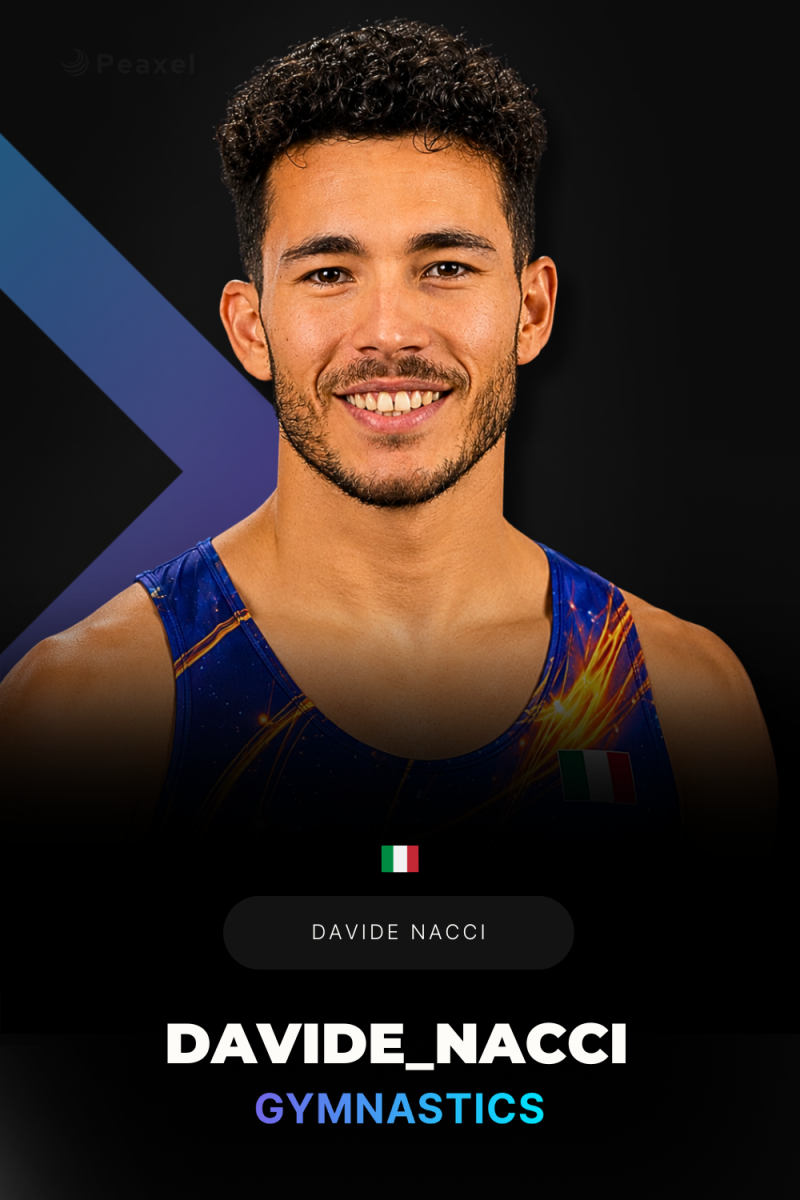
Davide Nacci, born in 2000 in Ostuni, in the Puglia region of Italy, is one of the leading aerobic gymnasts in the world and a
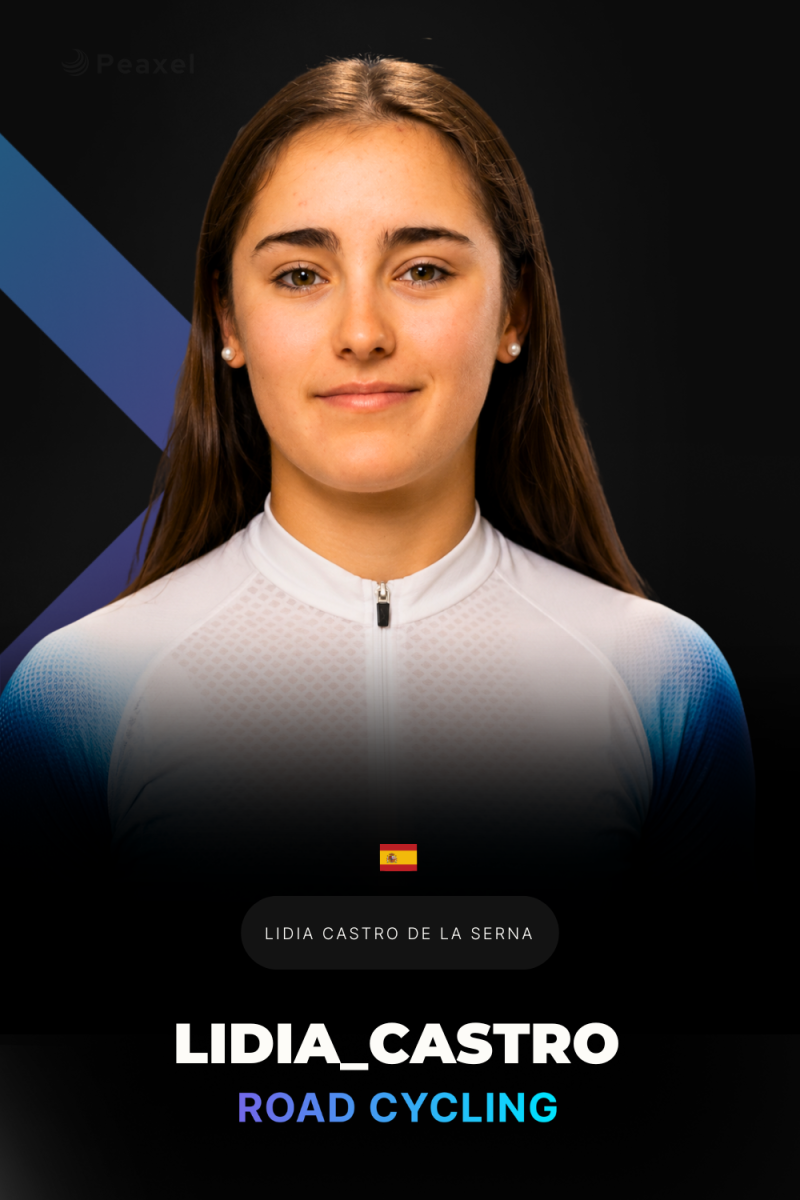
Lidia Castro de la Serna, born February 21, 2008, in Valladolid, Spain, is one of the most exciting young road cyclists in Europe. She grew