The Pattern Always Repeats
MMA was a fringe sport in 2005. By 2015 it was the fastest-growing combat discipline on earth. By 2025 it was a multi-billion dollar global industry.
Snowboarding was banned at most ski resorts in the late 1980s. By 1998 it was in the Winter Olympics.
Skateboarding spent forty years as a subculture. In 2021 it debuted at the Tokyo Games. In 2026 it is one of the most-watched youth sports on the planet.
The pattern is always the same. A sport grows in the margins — driven by passion, community, and raw athletic creativity. The mainstream ignores it. Then suddenly it doesn’t. And the people who were paying attention before the inflection point — the early fans, the early backers, the early believers — find themselves at the center of something enormous.
The Athlete Economy is built on this pattern. Peaxel exists to help fans identify the next inflection point before it arrives.
Here are the 15 fastest-growing sports in 2026. Some you know. Some you don’t yet. All of them are worth your attention right now — before the world catches up.
1. Padel — The Unstoppable Racquet Revolution
If you had to pick one sport that has most dramatically outperformed every growth projection of the last decade, padel is the answer.
From its origins in Mexico and its explosive adoption across Spain and Argentina, padel has become in 2026 the fastest-growing racquet sport in history by sheer number of new courts constructed globally. The sport now counts over 25 million active players across more than 90 countries. Courts are appearing in Stockholm, Dubai, Tokyo, São Paulo, and Lagos simultaneously.
What makes padel’s growth remarkable is its accessibility curve. Unlike tennis — which requires years of technical development before the game becomes enjoyable — padel delivers a satisfying competitive experience within hours of a first session. The glass walls, the enclosed court, the doubles format, and the forgiving racquet geometry create a sport that is simultaneously easy to start and endlessly deep to master.
In 2026, padel’s professional circuit is expanding rapidly. The Premier Padel tour — backed by the Professional Padel Association and major international investment — has established stops across four continents. Prize money is growing. Broadcast deals are multiplying. Sponsorship infrastructure is developing at a speed that mirrors the early years of the ATP tennis circuit.
The early mover signal: The padel athletes building their global profiles right now — before the broadcast deals mature, before the major sponsorship infrastructure arrives — are the ones whose cards will carry the most upside in the Athlete Economy. The sport’s trajectory is not in question. The question is only which athletes you are backing before the audience arrives.
Peaxel POV 2026: Padel is a natural next discipline for the Arena. Social-media-native athletes, global participation base, rapidly professionalizing circuit, and an audience that skews young and digitally engaged. Watch this space.
2. Pickleball — From Retirement Communities to Global Sport
Pickleball’s journey from American retirement community pastime to legitimate global sport is one of the most improbable growth stories in modern sports history.
In 2026, pickleball counts over 36 million players in the United States alone — a number that has roughly doubled every three years since 2018. International adoption is accelerating, with strong participation growth emerging in Canada, Spain, India, and across Southeast Asia.
The sport’s professional circuit has matured considerably. The Professional Pickleball Association and Major League Pickleball have attracted serious investment and broadcast partnerships. Athletes who were playing in community centers five years ago are now competing for six-figure prize pools in arenas.
What pickleball demonstrates better than almost any other sport on this list is the power of accessibility as a growth driver. Courts can be set up on any flat surface. Equipment costs are minimal. The learning curve is gentle enough that a first-time player can compete meaningfully within a single session. And the competitive ceiling is high enough that elite players find it endlessly challenging.
The early mover signal: The international professional circuit is still in its formative phase. Athletes from outside North America who are building competitive profiles right now are positioning themselves for a rapidly expanding global opportunity. The pickleball card with the most upside in 2026 is not the established American professional — it is the European or Asian athlete who builds early dominance before the international circuit matures.
Peaxel POV 2026: Pickleball’s social-media presence is already enormous. Athletes with strong content output alongside competitive results represent exactly the kind of dual-signal performance that Peaxel’s scoring architecture is designed to capture.
3. Parkour — From Underground to Olympic Horizon
Parkour’s trajectory in 2026 is the clearest example on this list of a discipline moving from cultural movement to institutional sport in real time.
What began in the suburbs of Paris in the 1990s — a practice built on moving through urban environments with speed, efficiency, and creativity — has become in 2026 a globally recognized competitive discipline with its first World Championship cycle underway and serious conversations about Olympic inclusion accelerating.
The sport’s growth in participation terms is extraordinary. An estimated 500 million people have engaged with parkour content on social media globally. Active practitioners number in the tens of millions across every inhabited continent. The discipline’s visual appeal — the fluid movement through space, the precision of landings, the creativity of line selection — makes it one of the most naturally shareable sports in the digital era.
The competitive format has evolved significantly. Speed runs, freestyle judging, and obstacle course variants have created a multi-format discipline that can be packaged for broadcast, live events, and digital content simultaneously.
The early mover signal: The first generation of professional parkour athletes is building right now. These are athletes competing at world championship level in a discipline that does not yet have the sponsorship infrastructure their performance deserves. The gap between their athletic achievement and their economic reward is one of the widest in all of sport — and therefore one of the most compelling opportunities in the Athlete Economy.
Peaxel POV 2026: Matthias Josue — currently one of the top-performing athletes on the Peaxel Arena — is one of the faces of this movement. Parkour is already live in the Arena. The athletes are real. The performance is elite. The world is catching up.
4. Kiteboarding and Kitesurfing — Wind, Water, and Global Expansion
Kiteboarding and kitesurfing occupy a unique position in the 2026 sports landscape: a discipline with genuine Olympic credentials, extraordinary visual spectacle, and a global participation base that is growing rapidly across coastal communities on every continent.
The sport’s inclusion in the Paris 2024 Olympics as Formula Kite — and its confirmed presence in Los Angeles 2028 — has dramatically accelerated both participation growth and professional infrastructure development. Athletes who have spent years competing on the PWA World Tour and IKA circuit are now operating in a sport with genuine Olympic legitimacy.
In 2026, the participation growth is concentrated in regions with strong wind resources and growing coastal sports cultures: Morocco, Portugal, Brazil, the Philippines, Vietnam, South Africa, and the Arabian Gulf. These markets are producing athletes who are simultaneously world-class competitors and compelling social media presences.
The early mover signal: The Olympic cycle is creating a structured progression pathway that is drawing new investment into athlete development. The kiteboarding athletes currently ranked outside the top ten globally but building toward the 2028 Olympic selection window represent some of the most compelling mid-term cards in the Athlete Economy.
Peaxel POV 2026: Water Sports is one of the most active categories in the Peaxel Arena. Roni Balbul, Jamie Overbeek, Claudia Leon, and Nathan TXR are all competing in the kiteboarding discipline. The real-world performance signals from this discipline are strong, frequent, and highly trackable.
5. Freeride Skiing — The Mountain’s Own Game
Freeride skiing in 2026 is a sport at a genuine inflection point.
The FIS acquisition of the Freeride World Tour in 2022 brought institutional legitimacy to a discipline that had always operated with proud independence. The first FIS Freeride World Championships — launching in 2026 — marks the sport’s formal arrival in the global competitive calendar. And serious conversations about Winter Olympic inclusion are accelerating.
Participation is growing rapidly across all skill levels. The proliferation of backcountry skiing content on YouTube and Instagram has created a generation of aspiring freeriders who see big mountain skiing not as an extreme niche but as an attainable athletic pursuit. The global ski touring market — the physical foundation of freeride training — is one of the fastest-growing outdoor sports categories in Europe, North America, and increasingly Asia.
At the elite level, the FWT Pro circuit produces some of the most visually spectacular athletic performance in any discipline — and some of the least financially rewarded athletes relative to the physical demands and risk they accept.
The early mover signal: The 2026 World Championships are creating a new benchmark for elite freeride performance. Athletes competing at the inaugural event are writing the first pages of what will become the sport’s historical record. Their cards in 2026 carry a significance that will only become clearer in retrospect.
Peaxel POV 2026: Tao Kreibich — Austrian freeride pro, two-time FWT competitor, YouTube documentary pioneer with “Life of Tao” — is Peaxel’s current Winter Sports anchor. He is exactly the kind of athlete this article is about: elite level performance, compelling narrative, growing digital audience, and economic reward that does not yet match his athletic achievement. That gap is an opportunity.
6. BMX — The Deepest Discipline in the Arena
BMX in 2026 is not a growing sport. It is an exploding one.
The discipline’s Olympic inclusion — both BMX Racing and BMX Freestyle Park — has created a development pipeline that is producing elite athletes at a rate the sport has never seen before. In parallel, the grassroots BMX culture — street riding, park sessions, local competitions — continues to generate athletes whose skill level rivals the professional circuit but whose visibility remains local.
The numbers in the Peaxel Arena tell the story clearly: in Gameweek 2026-09, 11 BMX athletes featured on the leaderboard. More than any other single discipline. The depth is extraordinary.
The early mover signal: BMX is producing elite athletes faster than the sponsorship infrastructure can absorb them. The gap between the top five and the next twenty BMX riders in the world is narrower than it has ever been — which means the upside on a correctly identified emerging BMX athlete is significant.
Peaxel POV 2026: BMX is the most competitive category in the Peaxel Arena by athlete volume. Matteo Faure leads the pack in GW2026-10 with 150K points. The BMX roster represents the broadest and deepest talent pool on the platform — and the competition between managers holding BMX cards is some of the most intense in any Gameweek.
7. Mountain Biking — The Enduro Generation
Mountain biking’s growth in 2026 is being driven by one format above all others: Enduro.
While cross-country and downhill mountain biking have established professional circuits with decades of history, enduro — a discipline combining timed downhill stages with untimed liaison climbs through natural mountain terrain — has in the last five years become the fastest-growing competitive format in the sport. The Enduro World Series attracts riders from over 40 countries. Participation events are oversubscribed globally.
What enduro captures that other MTB formats don’t is the full athletic profile of mountain biking: the technical descending skill of downhill, the cardiovascular engine of cross-country, and the navigation and decision-making of trail riding. It is a complete athletic test — and it is producing a generation of athletes with compelling stories, strong social media presences, and almost no mainstream sports media coverage.
The early mover signal: The enduro circuit is professionalizing rapidly. Athletes who are currently building their international profiles — competing in EWS rounds, building YouTube followings, attracting regional sponsors — are doing so in a window that will close as the sport’s mainstream visibility grows.
Peaxel POV 2026: Mountain biking is one of the most consistently strong-performing categories in the Arena. Mark Ymath, Lucio Vellutino, Blahavo, Ana Julia G, and Termoosaa all feature regularly in the top tier of Gameweek results. The discipline has the depth, the performance data, and the athlete quality to sustain long-term Arena competition.
8. Surfskating — Street Surfing Goes Global
Surfskating barely registered on mainstream sports radar five years ago. In 2026 it is one of the fastest-growing youth sports disciplines on the planet.
The concept is elegantly simple: a skateboard with a highly mobile front truck that replicates the carving motion of surfing on any flat surface. What began as an off-season training tool for surfers has become an independent discipline with its own culture, its own competitive circuit, and a global community of practitioners who have never touched a surfboard.
The sport’s growth is concentrated among the 16-to-30 demographic — the most digitally native, most socially engaged sports audience in existence. Surfskating content performs extraordinarily well on TikTok and Instagram. The visual fluidity of elite surfskating is immediately compelling even to audiences with no prior context for the discipline.
The early mover signal: The professional circuit is nascent. The athletes building competitive profiles right now are doing so in a sport with no established legacy hierarchy — no equivalent of a Roger Federer or a Kelly Slater whose shadow makes everyone else smaller. Surfskating in 2026 is a genuinely open field.
Peaxel POV 2026: Helena Kazmierczak is surfskating’s representative in the Peaxel Arena — and she is one of the platform’s highest-performing athletes. Her GW2026-09 score of 207,888 points placed her second overall across all disciplines. The sport’s digital-native audience and visual appeal make it one of the strongest content categories in the Arena.
9. Freestyle Roller — The Return of Skating Culture
Freestyle roller skating — aggressive inline, artistic roller, freestyle slalom — is experiencing a genuine cultural renaissance in 2026.
The discipline had its first mainstream moment in the 1990s, faded from public view in the 2000s, and has spent the last decade rebuilding through a combination of social media content, underground community events, and a generation of young athletes who discovered the sport through YouTube and Instagram rather than through the legacy infrastructure of skating parks and clubs.
In 2026 the trajectory is clearly upward. Roller sports feature on the program of the World Roller Games. The visual appeal of elite freestyle roller content — the spinning, the sliding, the aggressive urban sessions — generates strong engagement across digital platforms. And the athlete community has a collaborative, creative culture that produces compelling personalities alongside elite performance.
The early mover signal: The sport is still operating largely outside mainstream sports media. The athletes currently building at world championship level are doing so without the economic infrastructure their performance deserves. That gap is exactly where the Athlete Economy creates opportunity.
Peaxel POV 2026: Carla Martín is the Arena’s freestyle roller representative — and she is performing at a level that demands attention. Consistently featuring in the Extreme Sports top five across multiple Gameweeks, she is one of the most compelling examples of an athlete whose real-world talent is building visible momentum in the Arena.
10. Wingsuit and Wingsuit Proximity Flying — The Final Frontier
Wingsuit flying is simultaneously the most extreme and the least mainstream sport on this list.
The discipline — in which athletes jump from aircraft or mountain exits wearing a suit that adds significant surface area to allow controlled gliding flight — represents the outer limit of human athletic performance in terms of the combination of skill, precision, and consequence required. Elite wingsuit proximity flying, in which athletes navigate at high speed through specific terrain features meters from the ground, is among the most technically demanding athletic performances in existence.
In 2026 the sport is growing carefully — the community is deliberate about managing progression standards and safety education — but it is growing. The visual output of wingsuit flying is unlike anything else in sport. When a world-class wingsuit pilot threads a mountain ridge at 250 kilometers per hour, the footage produces a category of awe that no other discipline can replicate.
The early mover signal: The athlete community is small, deeply skilled, and almost entirely invisible to mainstream sports audiences. The gap between the athletic achievement of elite wingsuit pilots and their economic reward may be the widest of any discipline on this list.
Peaxel POV 2026: tomic_13 represents the wingsuit discipline in the Peaxel Arena. A reminder that the Arena is not just about the most popular sports — it is about the full spectrum of human athletic achievement. Every discipline deserves representation. Every athlete deserves an economy.
11. Muay Thai — The Art of Eight Limbs Goes Global
Muay Thai’s global growth trajectory in 2026 is being driven by two converging forces: the explosive worldwide expansion of MMA as a mainstream sport, and the independent emergence of Muay Thai as a standalone global discipline with its own professional infrastructure.
The sport’s origins in Thailand have not limited its reach. In 2026, elite Muay Thai practitioners compete and train across Europe, the Americas, Australia, and the Middle East. The ONE Championship promotion has brought Muay Thai to a global broadcast audience. The World Muay Thai Council and International Federation of Muay Thai Associations govern a competition calendar that spans every continent.
The early mover signal: The sport is producing world-class athletes outside its traditional Thai stronghold at an accelerating rate. European, American, and Middle Eastern fighters are competing at the highest levels of the discipline — and building the kind of cross-cultural fanbases that have historically preceded major commercial growth in combat sports.
Peaxel POV 2026: Kutluhan Sormagec leads the Fight Sports category in GW2026-10, demonstrating the real performance signals that Muay Thai athletes generate on the platform. The discipline is one of the most competitive in the Arena’s Fight Sports category.
12. Skydiving — Performance at Terminal Velocity
Competitive skydiving in 2026 encompasses a remarkable range of disciplines: formation skydiving, canopy piloting, speed skydiving, freefly, and the emerging discipline of vertical wind tunnel competition. Together they represent one of the most technically demanding and visually spectacular competitive ecosystems in all of extreme sports.
The sport’s growth is being driven partly by participation — skydiving centers globally report consistent year-on-year growth in tandem and solo student numbers — and partly by the explosion of first-person video content that gives audiences an unprecedented immersive window into elite performance.
The early mover signal: Competitive skydiving athletes operate almost entirely outside mainstream sports media infrastructure. World champions in canopy piloting or speed skydiving may be the best in the world at what they do and completely invisible to the global sports audience. That invisibility is the opportunity.
Peaxel POV 2026: Evans Santangelo, Will Penny, and Domi Kiger represent the skydiving discipline in the Arena — three athletes competing at elite level in a sport the mainstream has not yet caught up with.
13. Karate — Post-Olympic, Pre-Resurgence
Karate’s removal from the Olympic program after Paris 2024 was widely reported as a setback for the discipline. In 2026, the reality is more nuanced — and more interesting.
The World Karate Federation has responded to the Olympic exclusion by accelerating the development of independent competitive infrastructure. The Karate 1 Premier League circuit is expanding. Regional championships are growing. And the martial arts community has rallied around the discipline with a renewed sense of purpose and identity.
Meanwhile, karate’s inclusion in multiple Asian Games and regional multi-sport events maintains its pathway for athletes from Asia, the Middle East, and Eastern Europe — the discipline’s most competitive regions — to access structured international competition.
The early mover signal: The post-Olympic transition period is creating significant volatility in the discipline’s sponsorship landscape — which means that the athletes who are performing at elite level right now are doing so with reduced economic support. Reduced economic support combined with elite performance is the defining condition of Athlete Economy opportunity.
Peaxel POV 2026: Shahmalarani Chandran, Dariia Bulay, and Rusu Yuliia represent karate in the Peaxel Arena — athletes competing at world-class level in a discipline navigating a critical transition. Their presence in the Arena ensures the discipline’s story is being told and their performance is being rewarded.
14. Footvolley — Brazil’s Best Export You Haven’t Heard Of
Footvolley is exactly what it sounds like: volleyball played on a beach court using only the feet, chest, and head — no hands permitted. It originated in Brazil in the 1960s as a response to regulations banning football on Copacabana beach. The players simply picked up a volleyball and adapted.
In 2026 footvolley is experiencing its most significant period of international expansion. The sport has spread from Brazil to Portugal, Spain, Italy, Japan, and increasingly across Southeast Asia and the Middle East. The Footvolley World Tour visits multiple continents. And the discipline’s Brazilian origins give it a cultural richness and technical standard that makes elite footvolley one of the most impressive athletic spectacles in beach sports.
The early mover signal: Outside Brazil and Portugal, footvolley remains almost entirely unknown to mainstream sports audiences. The athletes building international profiles right now are doing so in an open field — there is no legacy hierarchy in international footvolley, no established stars whose dominance makes the competitive landscape static.
Peaxel POV 2026: edumartinss represents footvolley in the Arena — and in GW2026-10 posted 48,181 points to lead the Team Sports category. A discipline most managers had never encountered before joining the Arena. That is the Athlete Economy working exactly as designed.
15. Aerial Gymnastics and Acrobatic Sports — The Performance Frontier
The category of aerial and acrobatic sports — aerial gymnastics, acrobatic gymnastics, trampoline, tumbling, double mini trampoline — represents in 2026 one of the most technically extraordinary and least commercially developed competitive ecosystems in all of sport.
These are disciplines where athletes train for a decade or more to achieve performance standards that, when witnessed live, produce genuine awe in any audience. The combination of flight, rotation, spatial awareness, and physical precision required at elite level is comparable to any Olympic discipline — and in many cases exceeds it.
The growth is real. Trampoline gymnastics participation is increasing globally, particularly in Asia and Eastern Europe. Aerial gymnastics is developing competitive infrastructure beyond its traditional strongholds. And the social media presence of elite acrobatic athletes — whose training videos and performance clips are among the most compelling in any sport — is building audiences that the traditional competitive infrastructure has not yet learned to monetize.
The early mover signal: These athletes are world-class performers with almost no economic infrastructure supporting them. The Athlete Economy opportunity here is as clear as it gets.
Peaxel POV 2026: Trent Does Gymnastics, Derek Therrien, Hayato Miyano, and olg1289 represent the acrobatic and aerial disciplines in the Arena. Their performances in the Gameweek format demonstrate exactly what the Athlete Economy is built to capture: elite athletic achievement that the mainstream has not yet found.
The Early Mover Principle
Every sport on this list was, at some point, invisible to the mainstream.
Parkour was an underground movement. Kiteboarding was a water sports curiosity. BMX was a backyard subculture. Muay Thai was a regional martial art. Padel was a Mexican invention that nobody outside Latin America had heard of.
And then the inflection point came. It always comes.
The athletes who were building during the invisible phase — the ones training, competing, creating content, building community before the broadcast deals and the sponsorship infrastructure arrived — those are the athletes whose early supporters were rewarded most significantly when the world finally caught up.
The Athlete Economy exists to make that early-mover relationship formal, structured, and economically real.
You don’t have to wait for the mainstream to tell you who matters.
The Arena already knows.
👉 Join the Arena for free: game.peaxel.me

Matthys Gratien, born February 15, 1999, in Bondy, France, is a professional rugby union player competing as a winger. Standing 1.72m and weighing 86kg, he

Bekir Karaömerlioğlu is a Turkish Muay Thai athlete and member of the Turkish national military sports team, with ties to both Samsun and Adana. He
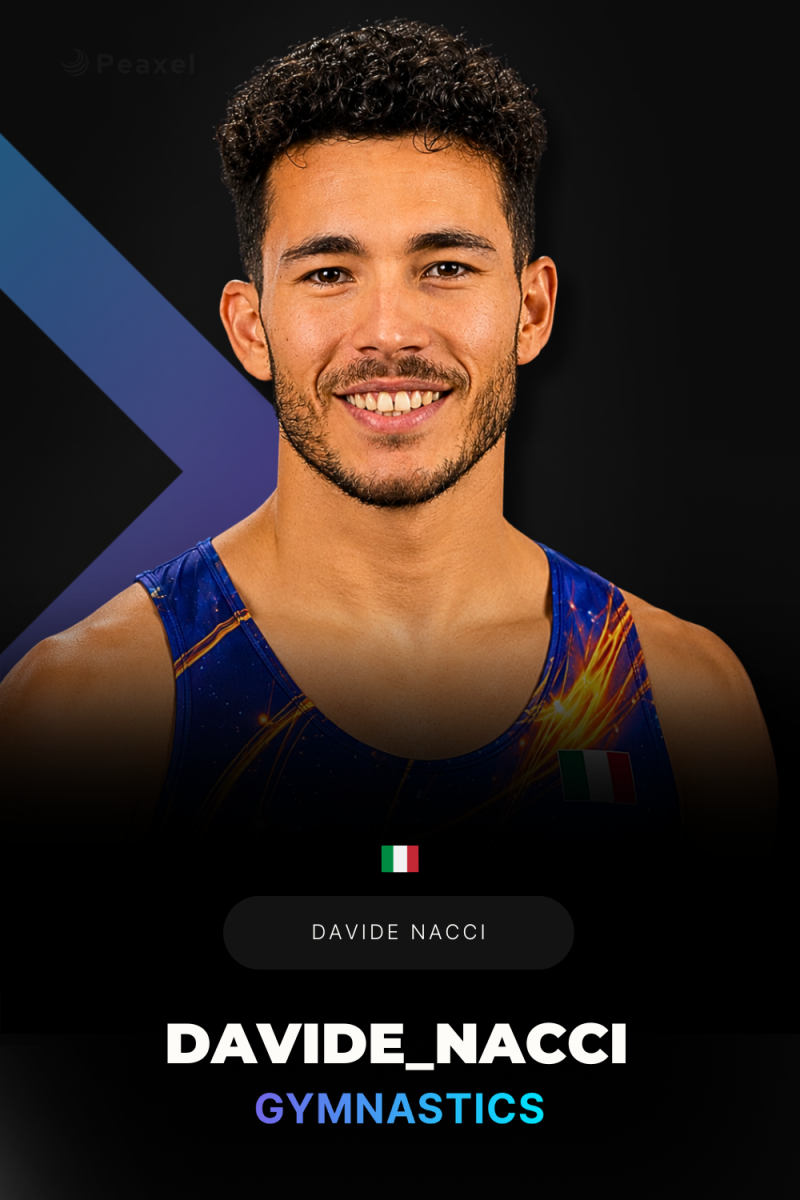
Davide Nacci, born in 2000 in Ostuni, in the Puglia region of Italy, is one of the leading aerobic gymnasts in the world and a
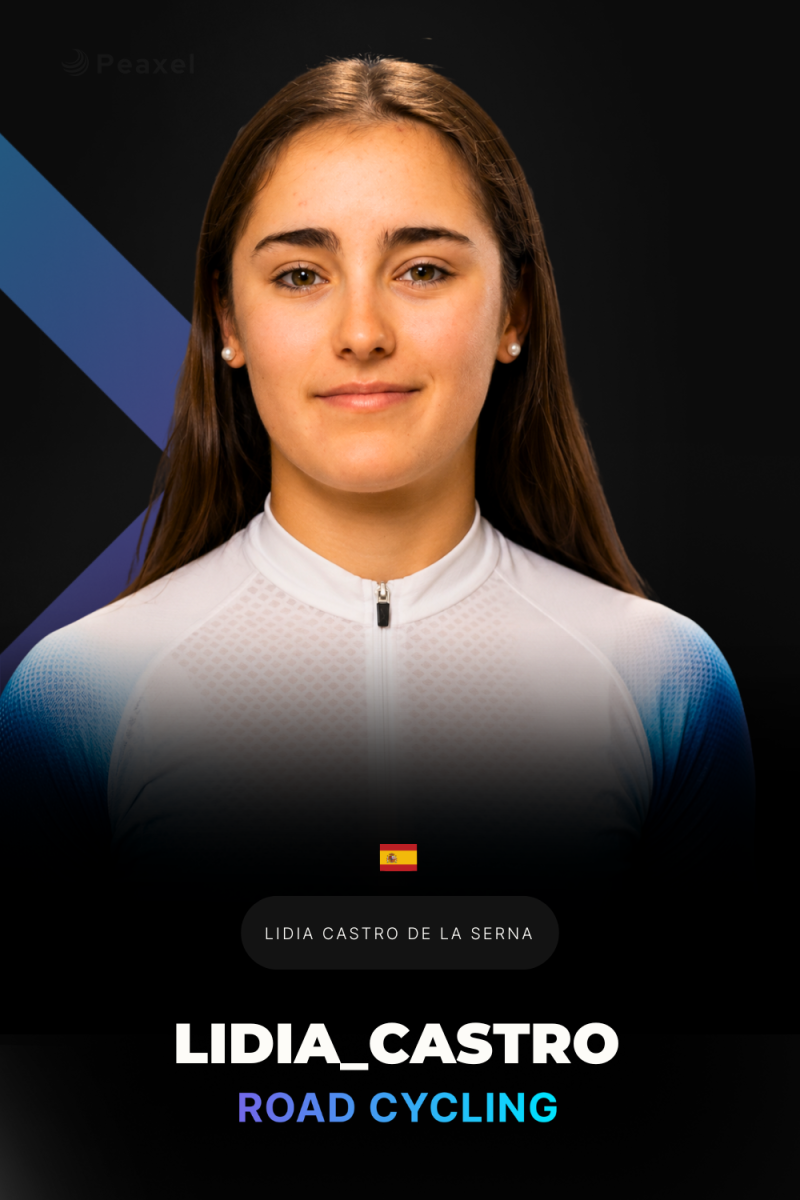
Lidia Castro de la Serna, born February 21, 2008, in Valladolid, Spain, is one of the most exciting young road cyclists in Europe. She grew